Case study · Nov 2026
The Veritas Design System
A design system for a portfolio of enterprise products, started in a community of designers and taken to the company standard one person at a time.
OutcomeApproved and funded at the C level, set as the standard for new and long-lived products, and live in three major products within the first year.
Veritas, an enterprise data protection company, sold many products to the same customers. Each product team had solved the same use cases and the same user problems with its own answer. A customer running more than one product met one problem solved several ways. In 2016 I saw that from the Office of the CTO, where I was a designer.
A platform migration was also coming. Customers would be moving to a new stack, and without shared patterns they would have to relearn the interface as they went.
The company already had UI standards and guidelines, and adoption across products had been a challenge. Each product implemented them on its own. Research, design, and front-end work were repeated business unit by business unit, and the versions still did not match.
The designers and researchers sat inside separate product organizations. In the summer of 2016 my team started a UX community that brought them together across the company, and I helped. I had the vision for a design system. It started that September as a partnership between UX and front-end development. I moved from design into product management to drive it, with the help of my leaders and others along the way.
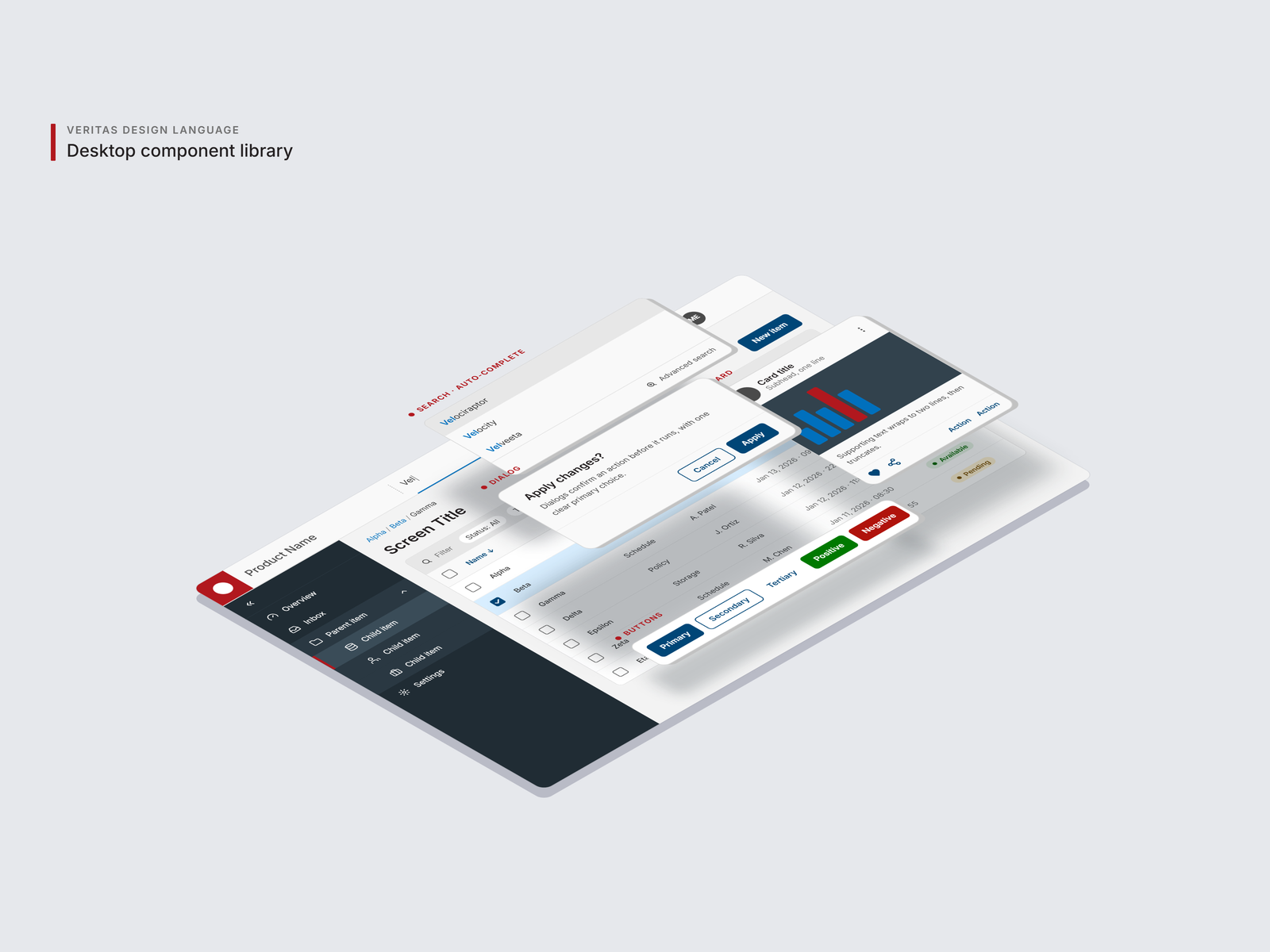
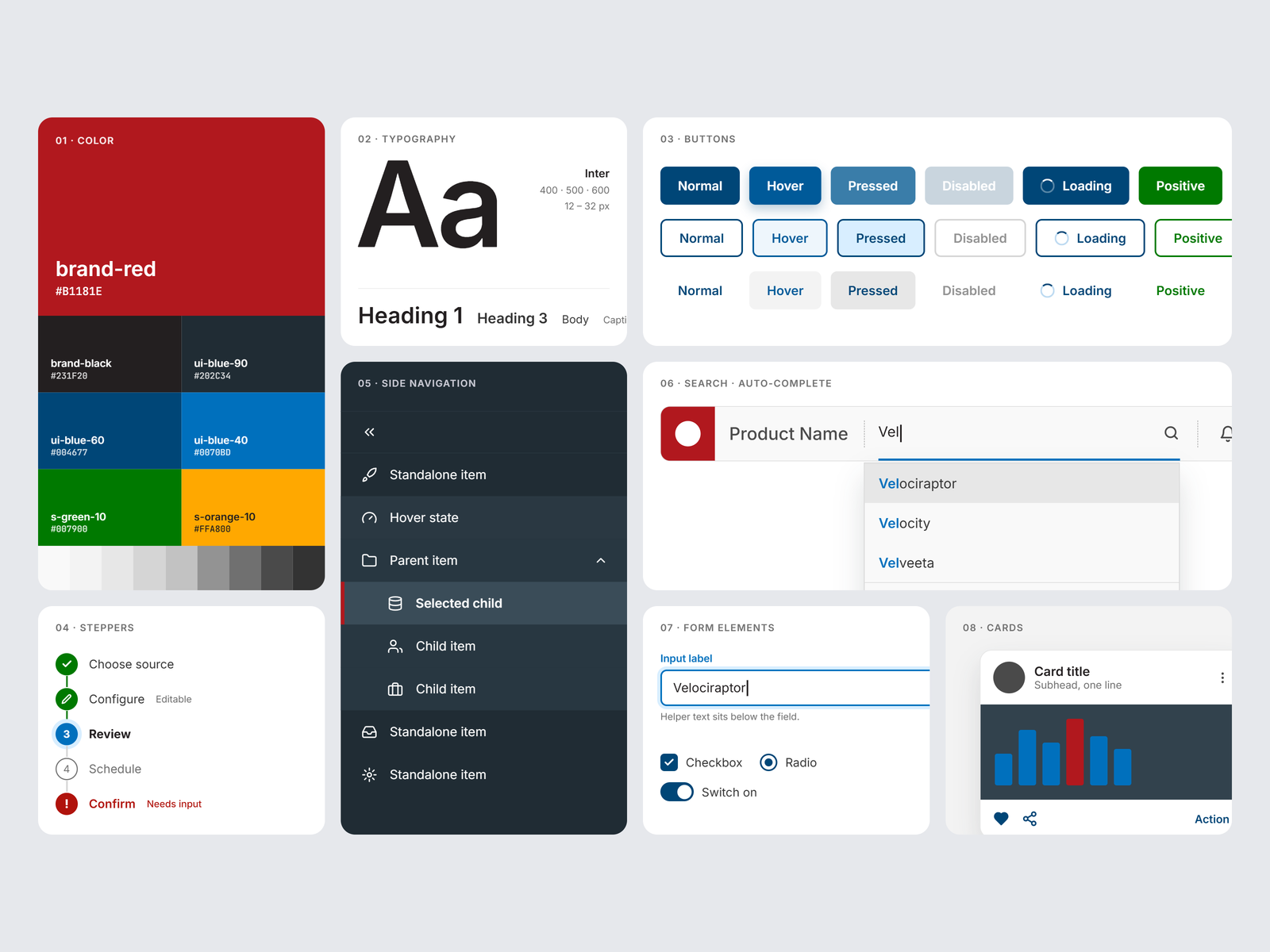
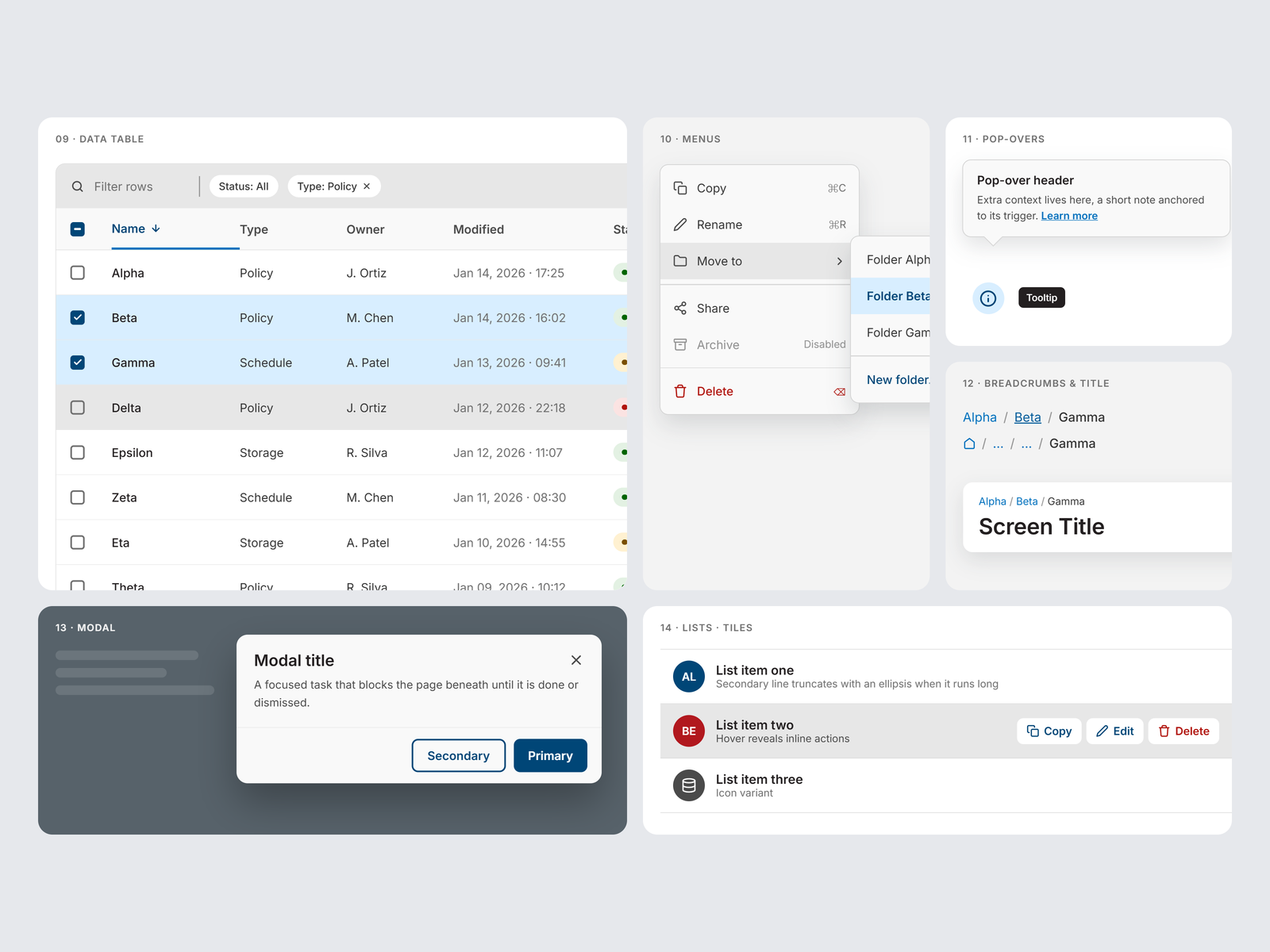
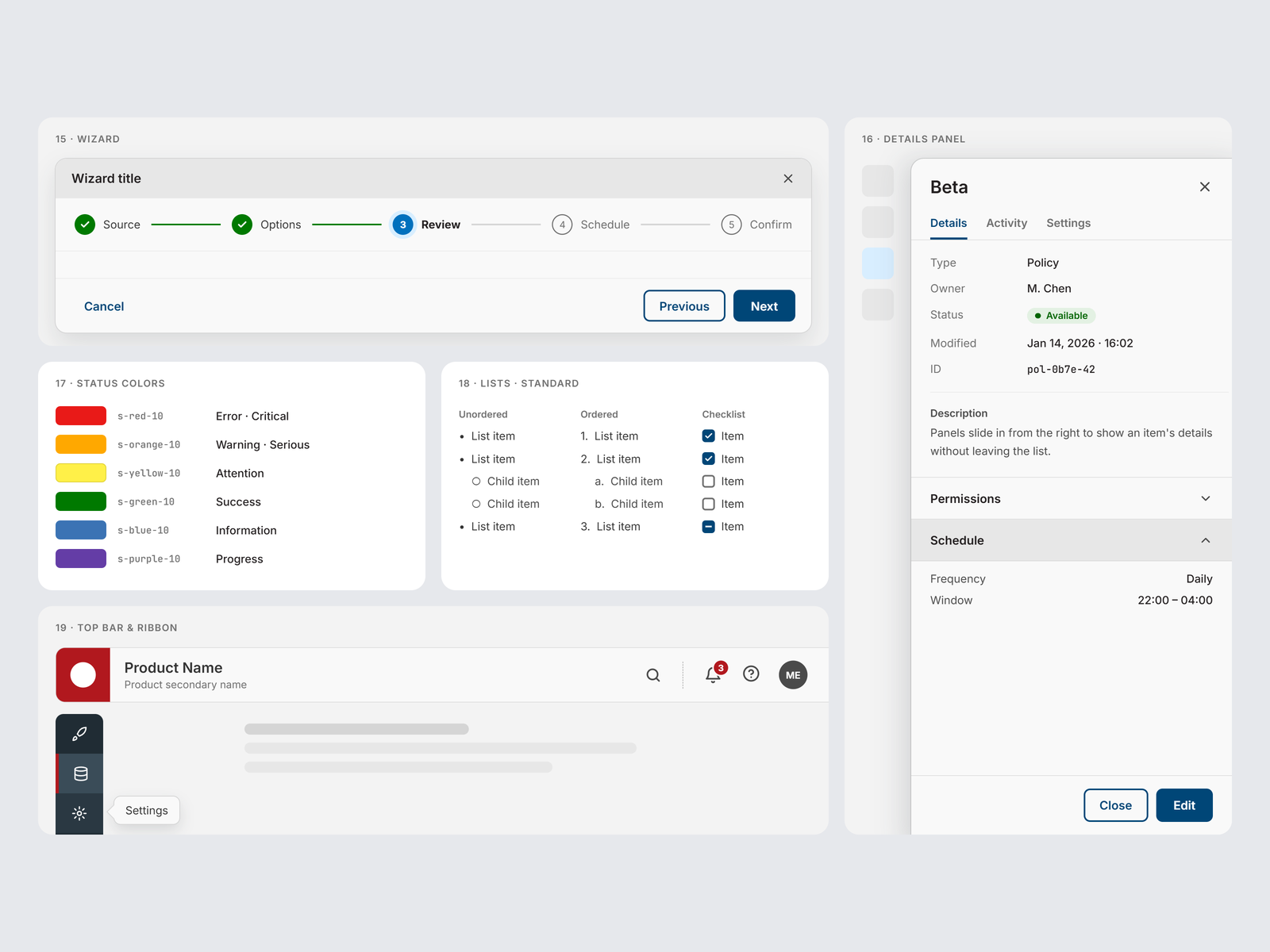
Known internally as the Veritas Design Language, the system offered the standards as a shared service, with production-ready code behind them. Designers worked from shared libraries. Developers installed the components as a package, so a change could be made once and reach each product as an update. The system was built in levels, from atoms such as a button through molecules and compound molecules to templates and patterns.
The business case started with the customer. As products adopted the system, customers would meet one cohesive experience across them. The learning curve would shorten as the products were integrated, new features would reach customers sooner, and the interface would become a place to cross-sell other Veritas offerings. The internal case was cost, and it used a button to show the cost at the smallest scale. In the model, one change to a button cost 445 hours of design and front-end work across seventeen products. With the change made once in shared code and pulled as an update, the products spent at most 20 hours testing it. The case then moved up the levels to templates and patterns, where the scale showed most and where a user problem solved once was solved across the portfolio.
Each business unit was focused on the problems in front of it, so adoption had to fit each product's own roadmap. We built the buy-in one person at a time, beginning with alignment in the UX community. Engineers joined and worked on the code as an innersource model. Each product team got the same questions about its last release, its next one, when adoption could go on its roadmap, and which products it planned to integrate with. From there we took it to product leadership, and product and design leadership aligned on the system as the standard for new and long-lived products. The standard came after the buy-in rather than before it.
The case was approved and funded at the C level. Of the seventeen products, thirteen had a future on the roadmap, and we tracked adoption for each of them. Within the first year three major products were live on the system, in modern backup and recovery, hardware scaling, and container management. The system and the UX community were both still in use in 2024, when Cohesity acquired the company's data protection business.
Artifacts