Idea exploration · Nov 2026
A safer, more thoughtful way to fundraise
An idea exploration with a working prototype. The working name is Perchway.
StatusConcept with a working prototype. Not pursued.
The idea
Years ago, a company I owned built a fundraising app for one of our customers. I've been thinking about how I would approach it now, with what I've learned since and as a father.
My first thought was about the kids. A child selling door to door is talking to strangers at their front doors. I wanted to know how to keep kids safe in those moments and still have an authentic experience while fundraising.
My next thought was about the houses. Some homes don't want solicitors, and some are homes a child shouldn't visit. The app should know that before the child gets there.
The rest followed from those two. An intelligence layer could help a family decide where their time is best spent in a neighborhood, and when another way of reaching out makes more sense. A record could carry from one year to the next for a fundraiser, a school, or an organization. The idea leaves sales and payments to the companies that already do them and works in the gaps around them.
What I set out to learn
How do we keep kids safe in those moments and keep the experience authentic?
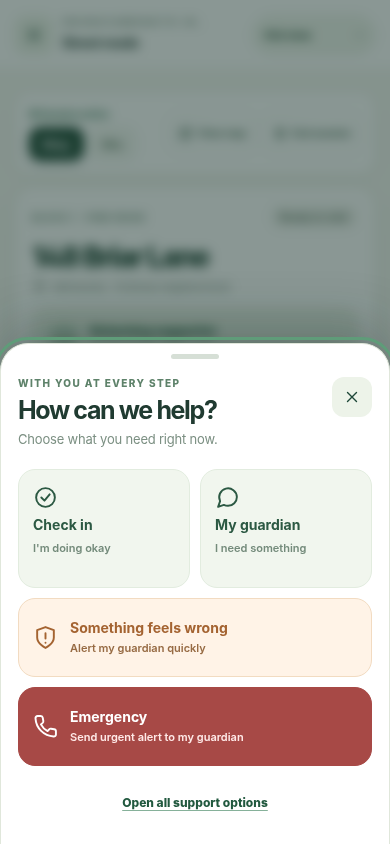
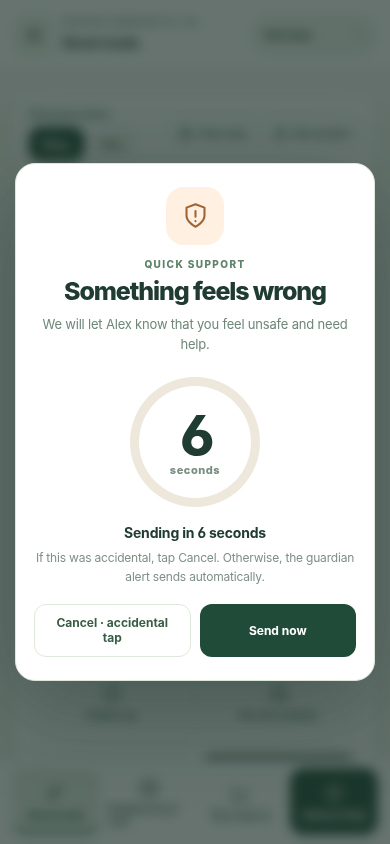
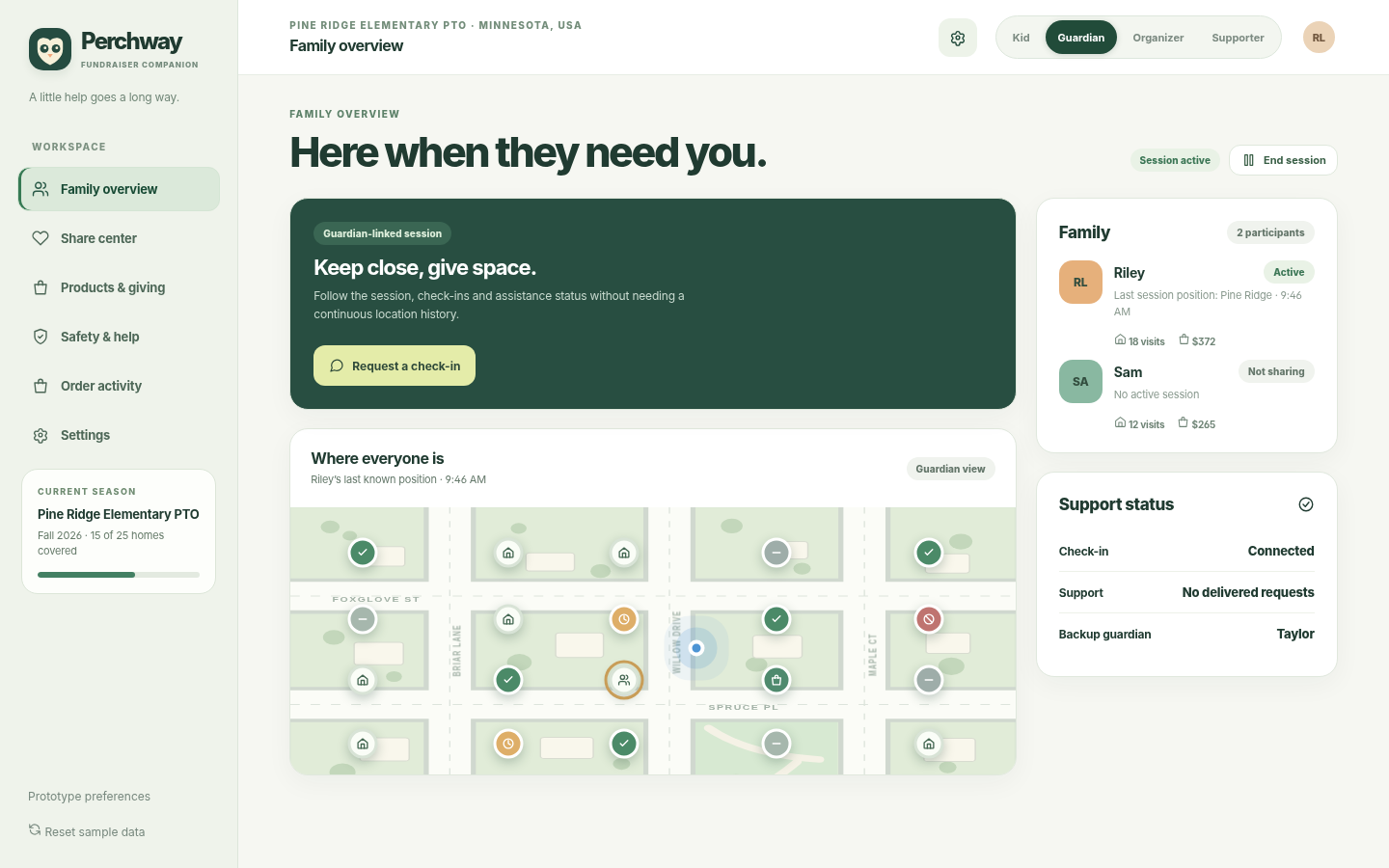
What I tried. Safety & Help sits in the bottom bar of the phone on every screen. It opens four choices, which are Check in, My guardian, Something feels wrong, and Emergency. The two urgent choices start a short countdown that the child can cancel or skip with Send now. The guardian marks a request acknowledged, responding, and resolved, so the child is not told help is coming before someone has answered. I also explored a way to reach the authorities that could be switched on when a guardian isn't present or nearby. It is not in the prototype.
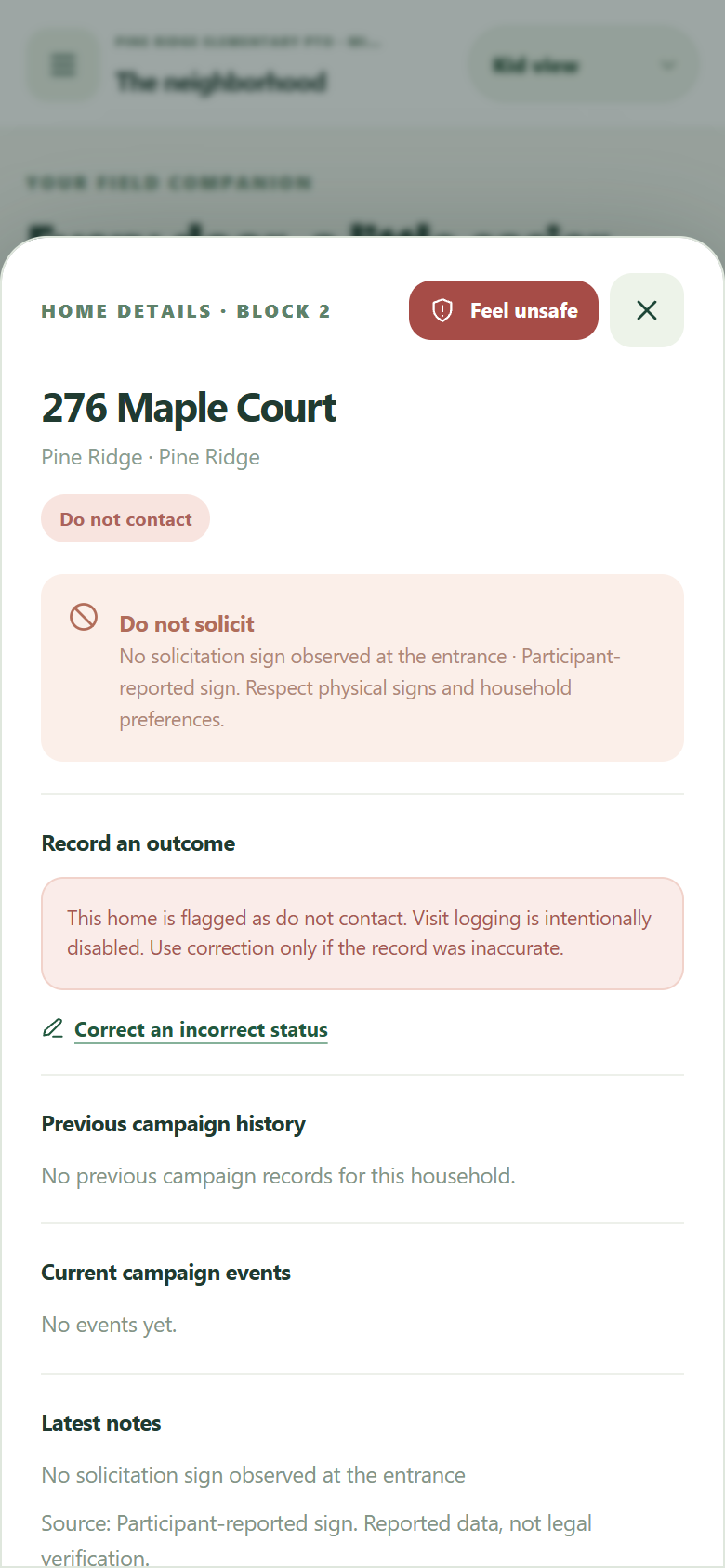
How do we keep kids away from houses that should not be visited?
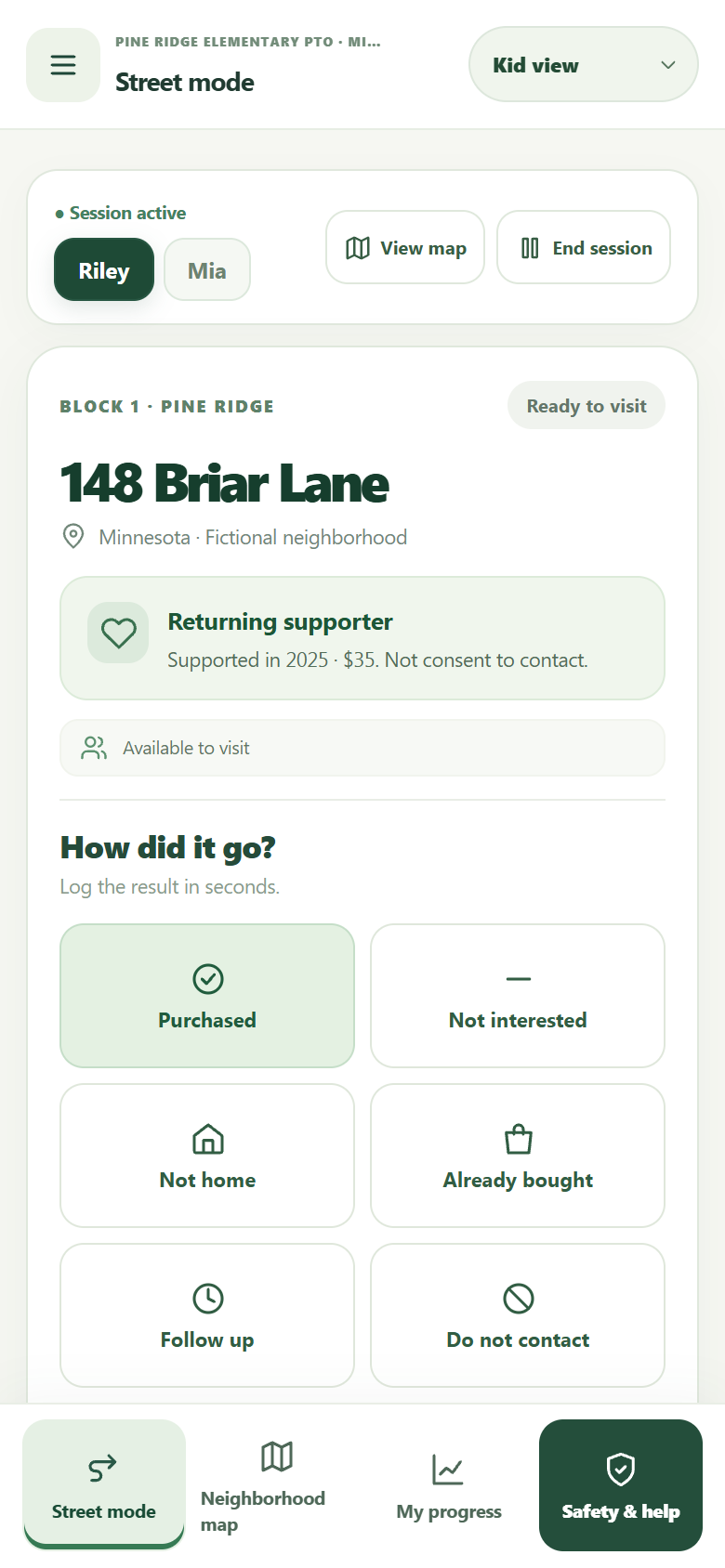
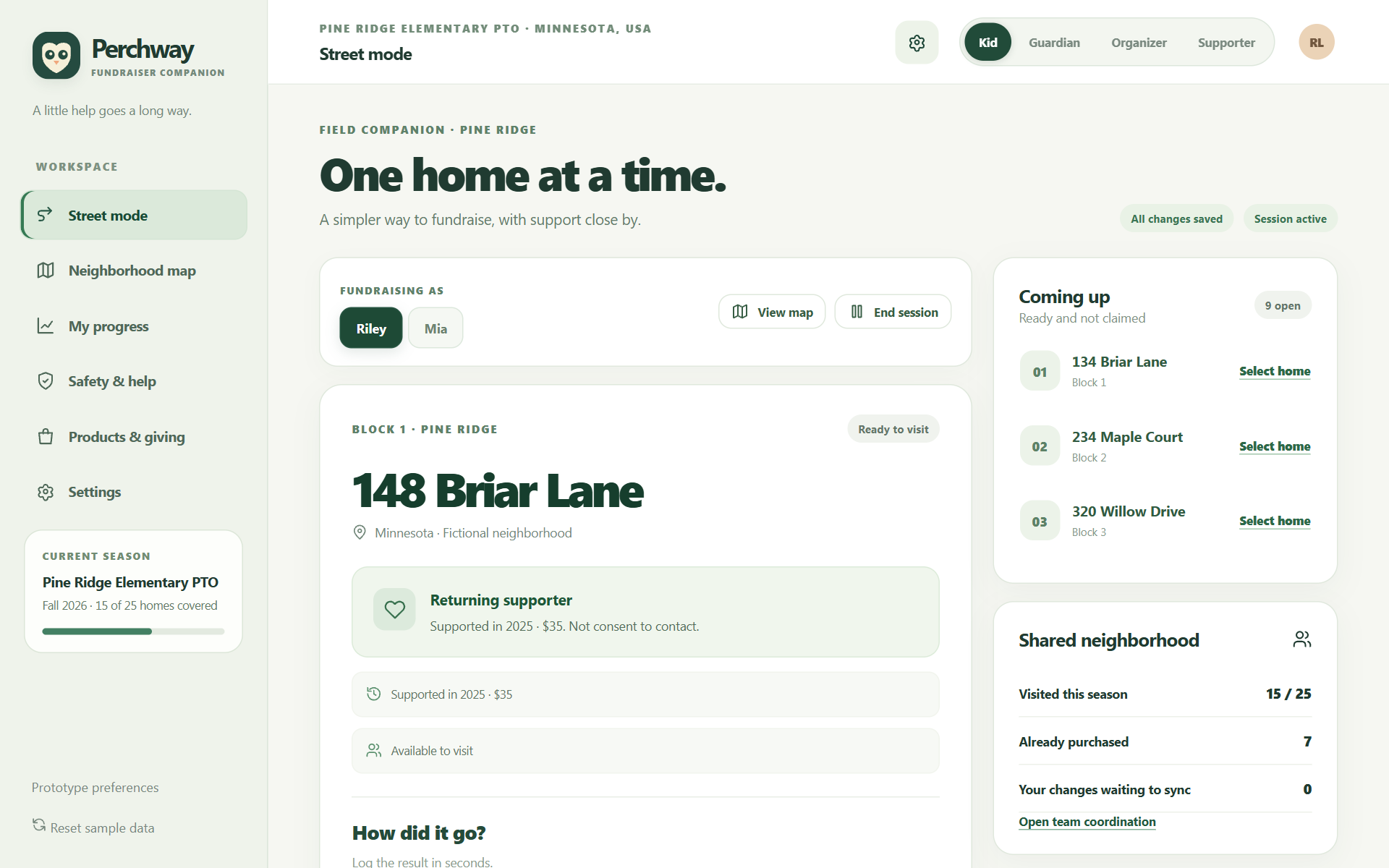
What I tried. Every house keeps its own record. A house marked do not contact shows a warning, and the app turns off visit logging for it. A past purchase is shown as history and labeled as not consent to contact. A house with no record is not treated as permission either. Marking houses known to be unsafe is part of the idea. I did not add it to the prototype.
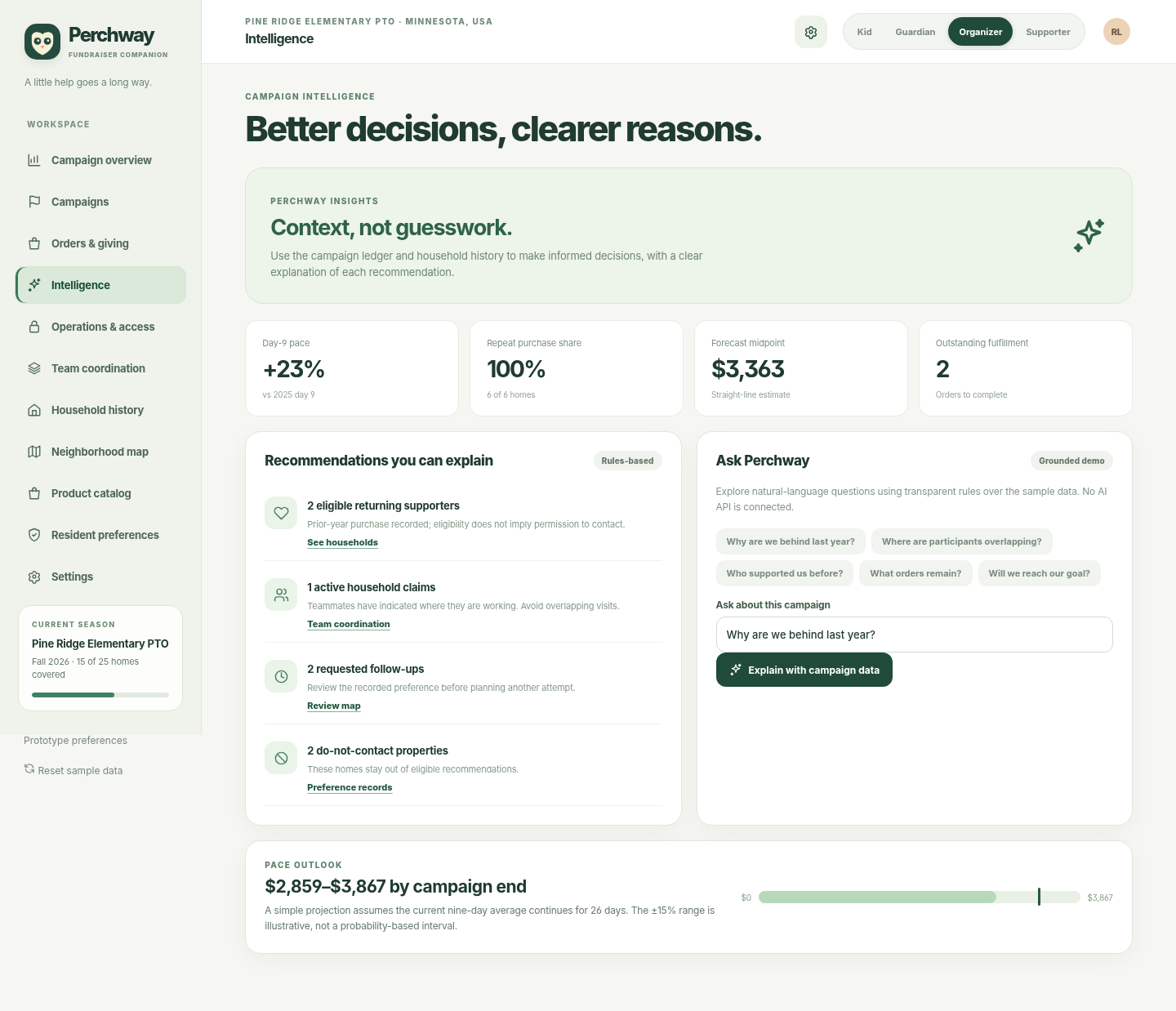
Where does an intelligence layer help, and when is another way of reaching out better?
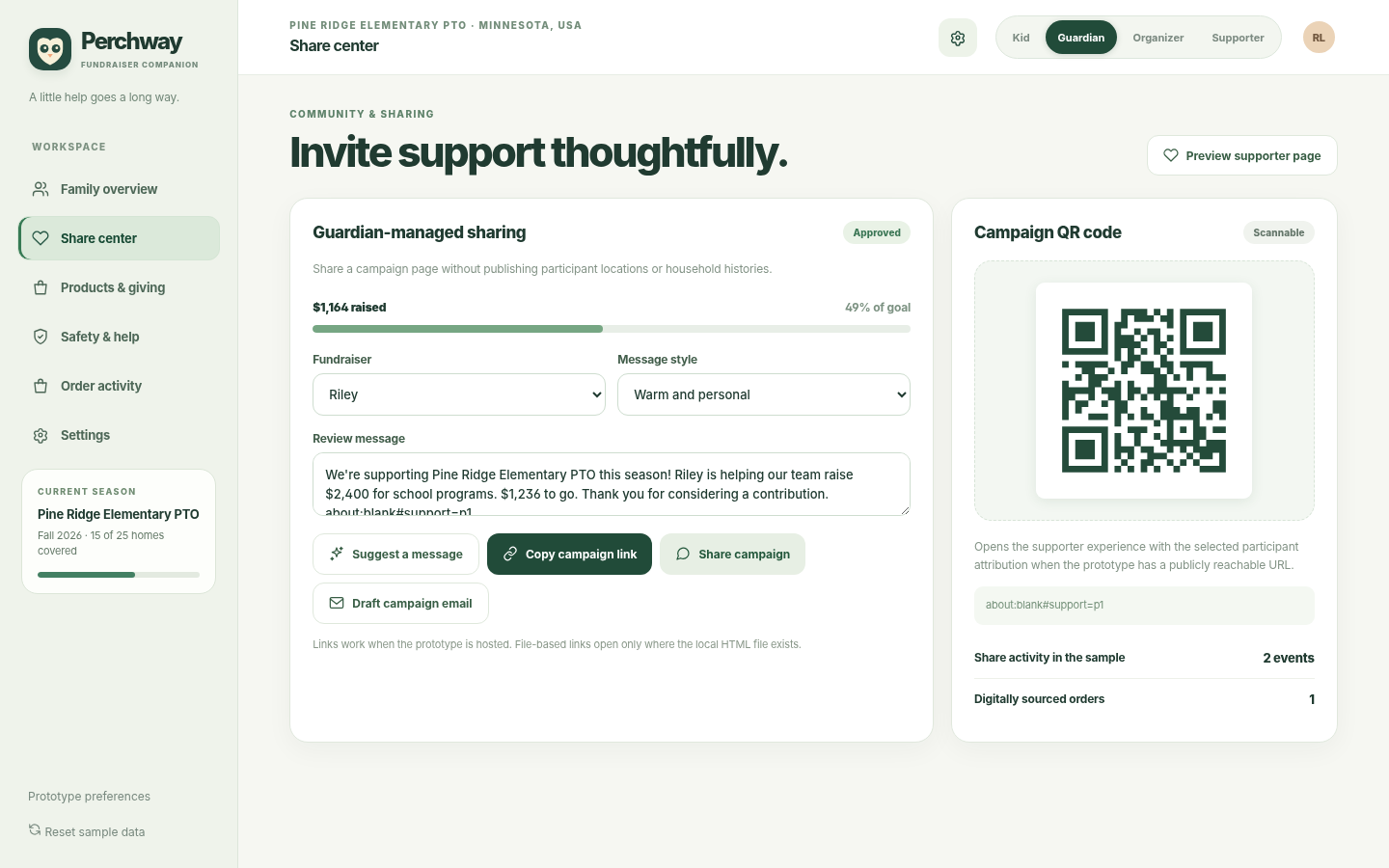
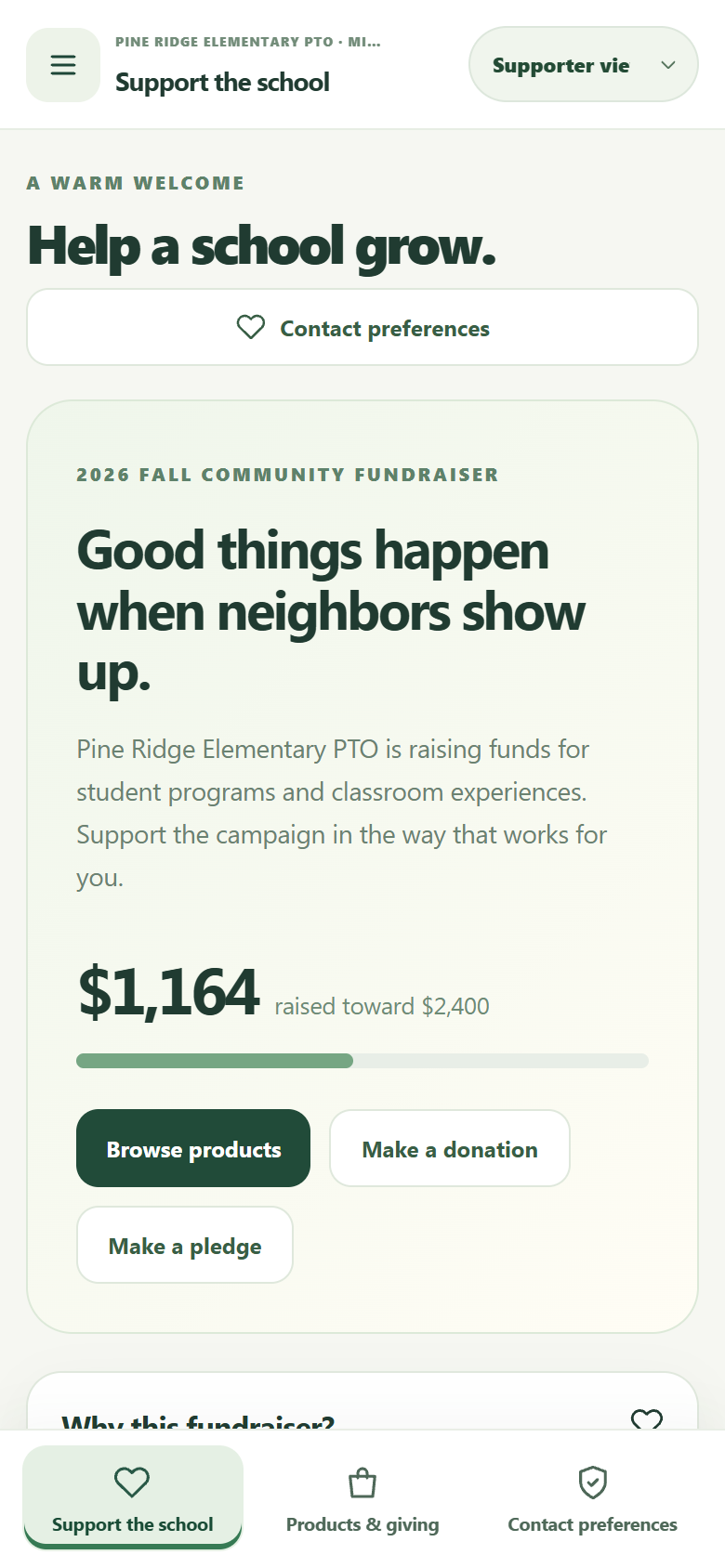
What I tried. The organizer view explains campaign pace, returning supporters, and overlapping visits from the recorded data, using plain rules. The prototype stops short of connecting an AI model and explores where one could responsibly sit. For reaching out without knocking, a guardian can share the campaign by link, email, or QR code.
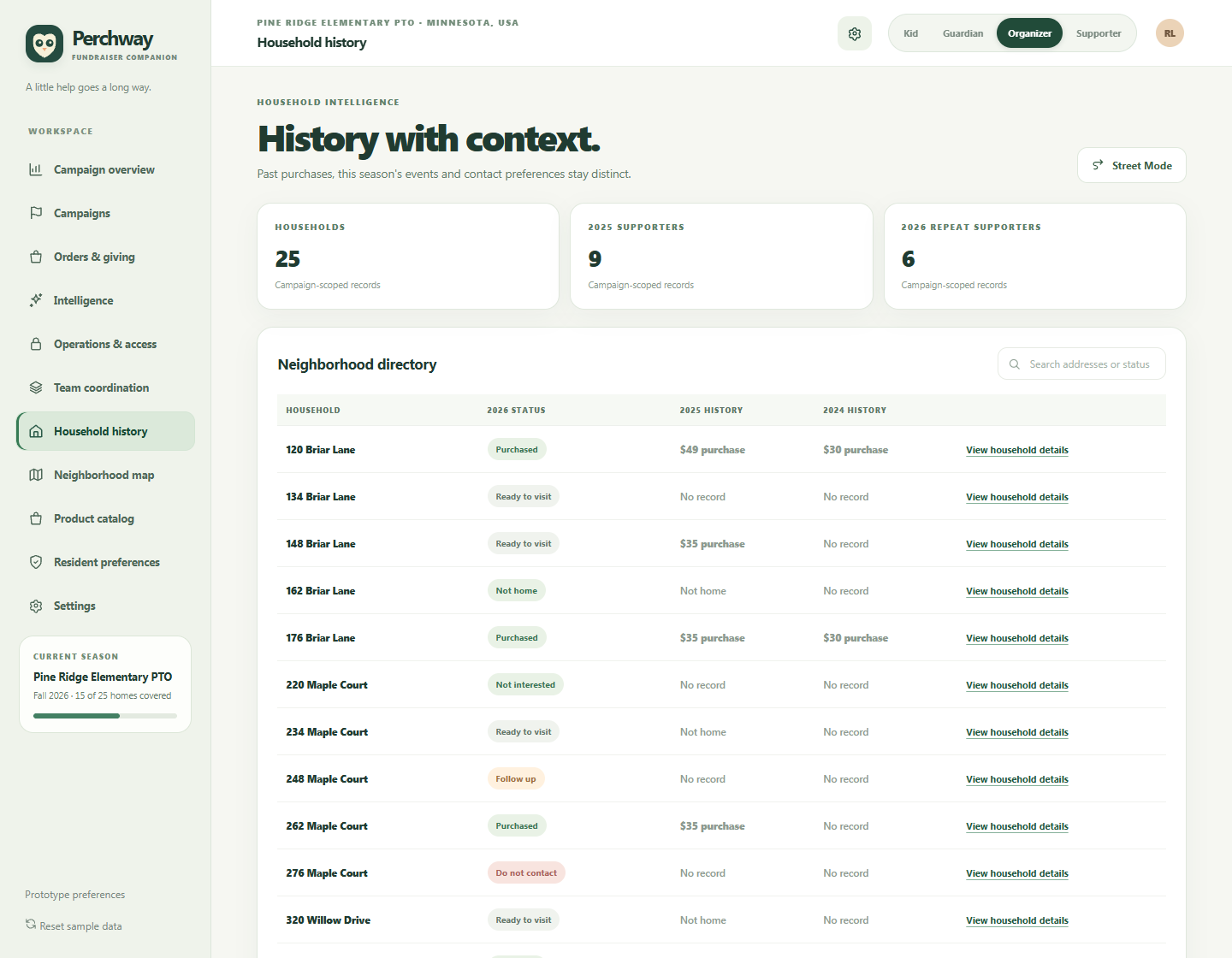
What should carry from year to year?
What I tried. A house keeps its visits, purchases, and preferences across campaigns. The record tracks purchases year over year for an individual fundraiser, a school, or an organization.
How do we fill the gaps without competing with established companies?
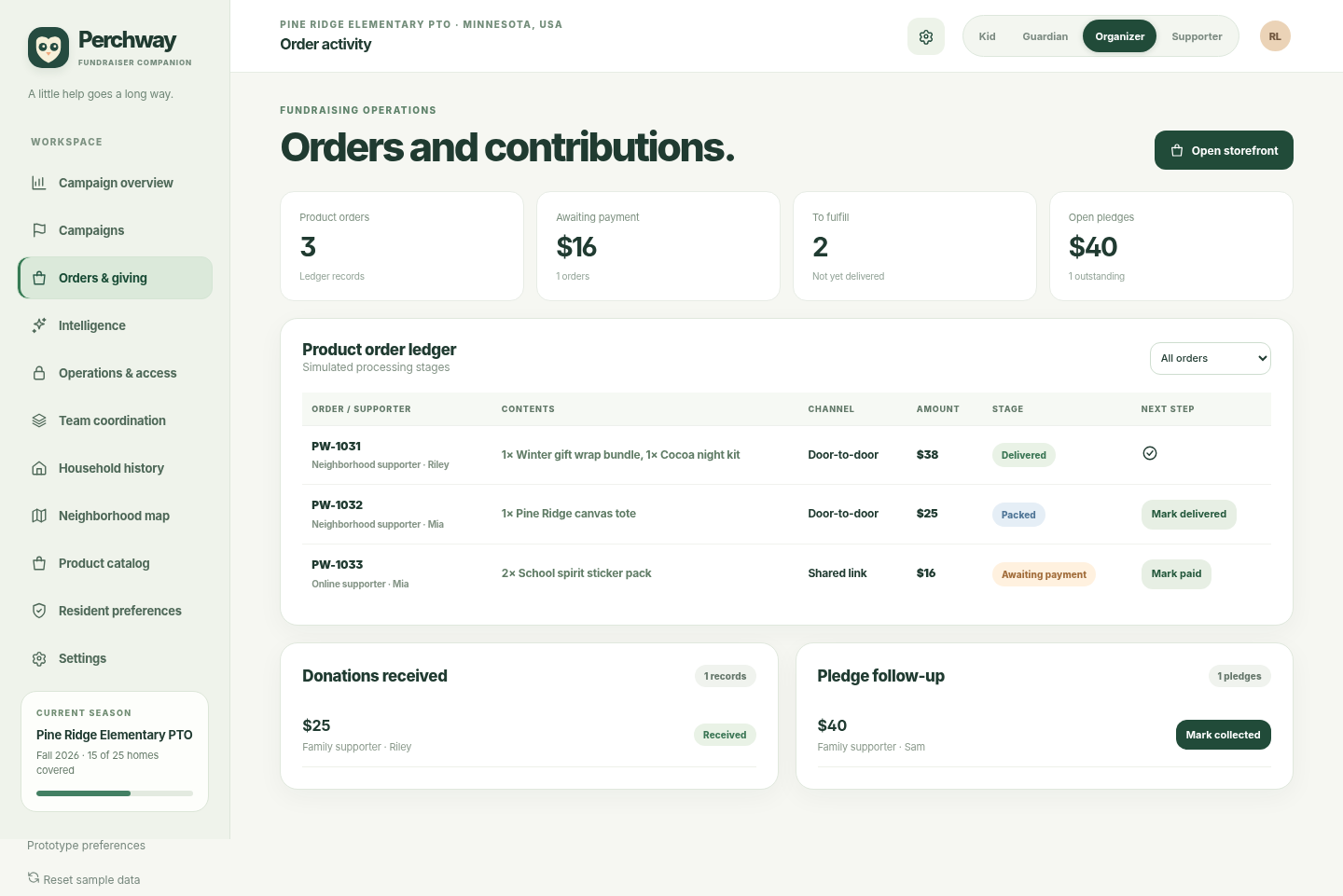
What I tried. I built a lightweight management system with a small store, orders, and sharing, so the idea could be tested across the Kid, the Guardian, the Organizer, and the Supporter. In a real product those parts would belong to the platforms that already run them. It is hard to explain without seeing it in action, which is why the prototype is here.
The prototype
Things to try
- Switch between the Kid, the Guardian, the Organizer, and the Supporter
- Open Street mode as the Kid
- Look for a house marked Do not contact
What I learned
I learned more about how an app like this could communicate with the authorities, and about the systems it could connect to for the data the idea depends on.
Nothing here is hard for an established fundraising company to build. One of them could add it as a feature in two to four weeks. On its own the idea has no moat, so I'm not pursuing it. It was a fun exploration.
What is real
Everything in the prototype is fictional or simulated. That covers the people, the addresses, the totals, the alerts, the location, and the payments. Nothing sends a message or a notification. None of it was tested with users.