Idea exploration · May 2026
A fitness app that meets you where you are today
An idea exploration with a working app and a prototype of what comes next. The working name is Attune.
StatusA working app, with a prototype of what comes next.
The idea
I had some injuries and complications that made it hard to get back to working out at the level I was used to. What I could do changed from day to day, so I had to stay flexible. After that I kept seeing the same thing with friends, family, and acquaintances.
Most fitness apps and programs are structured. They set the plan and the person keeps up with it. I wanted something that gives a person attention every day, because momentum and consistency matter more than a couple of great sessions.
Attune meets people where they are, with no shame for a missed day. It is kind and supportive whether you worked out yesterday or 30 days ago. The movement can be breathing and light stretching, or it can be heavy weights.
What I set out to learn
How do you find out where someone is today without making it a chore?
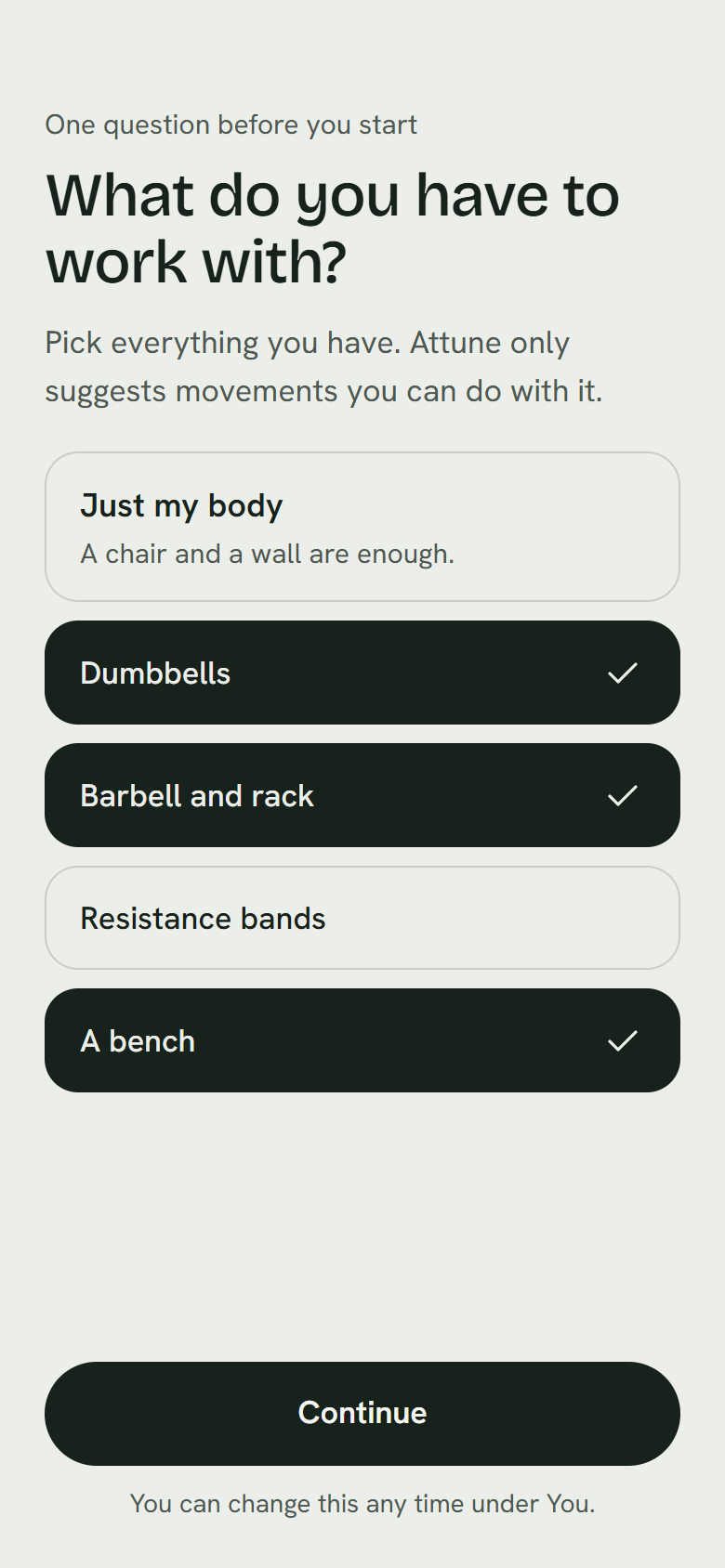
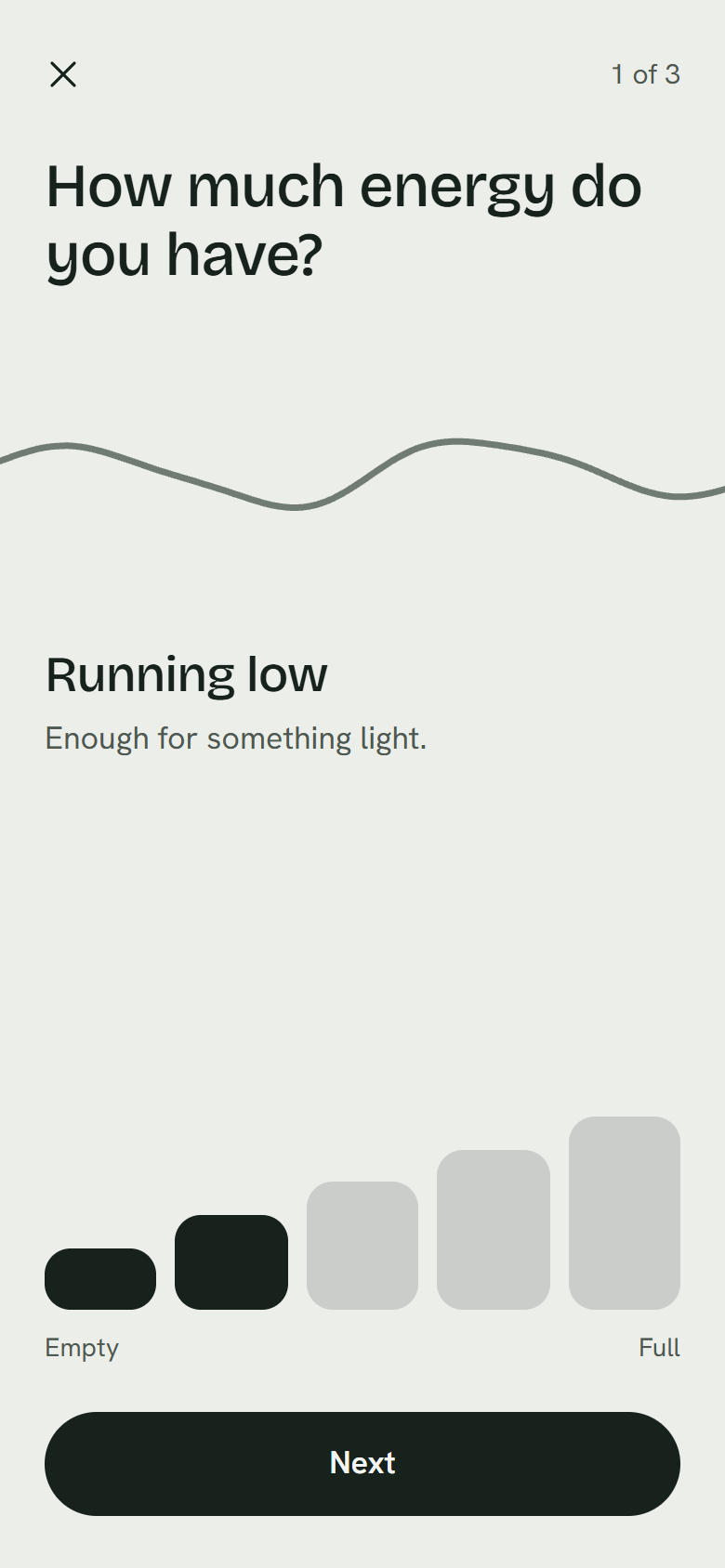
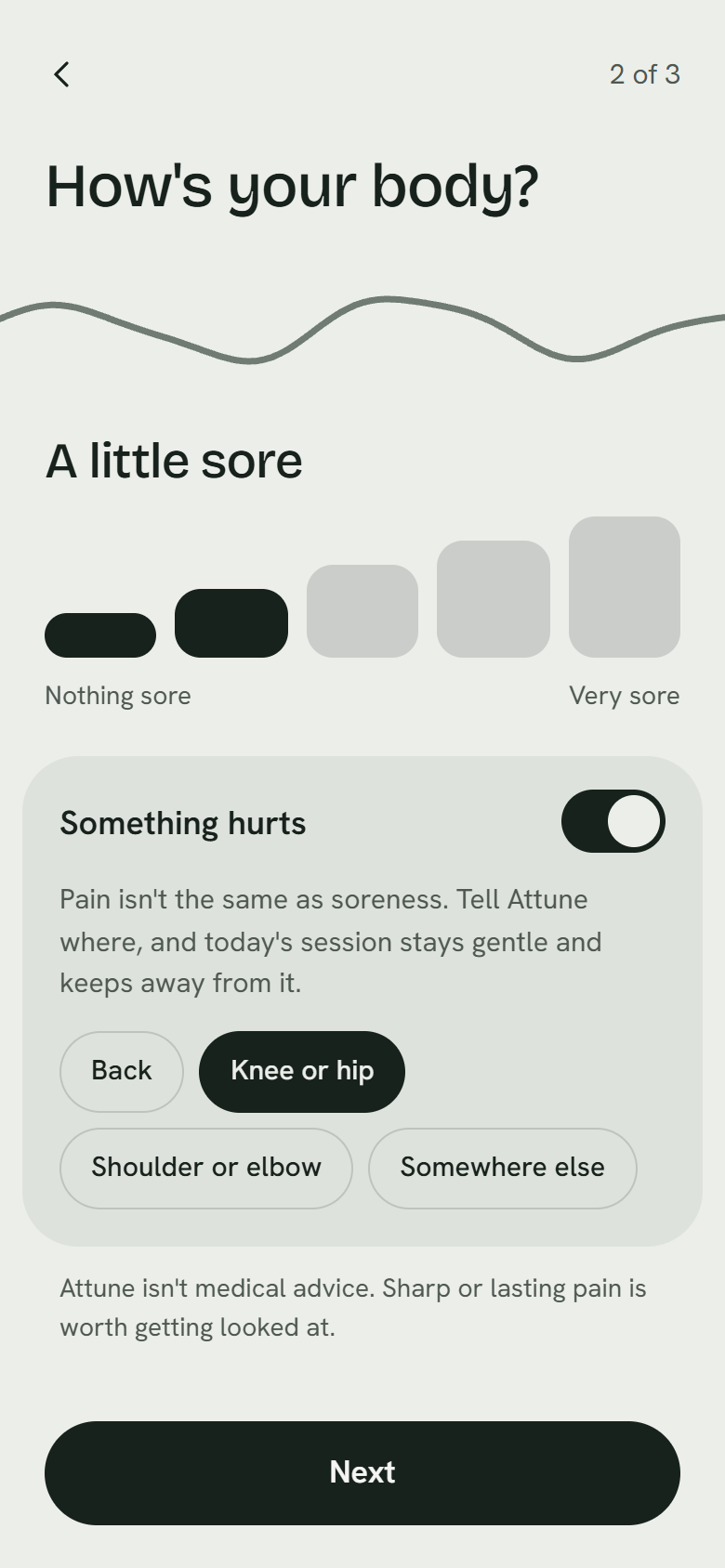
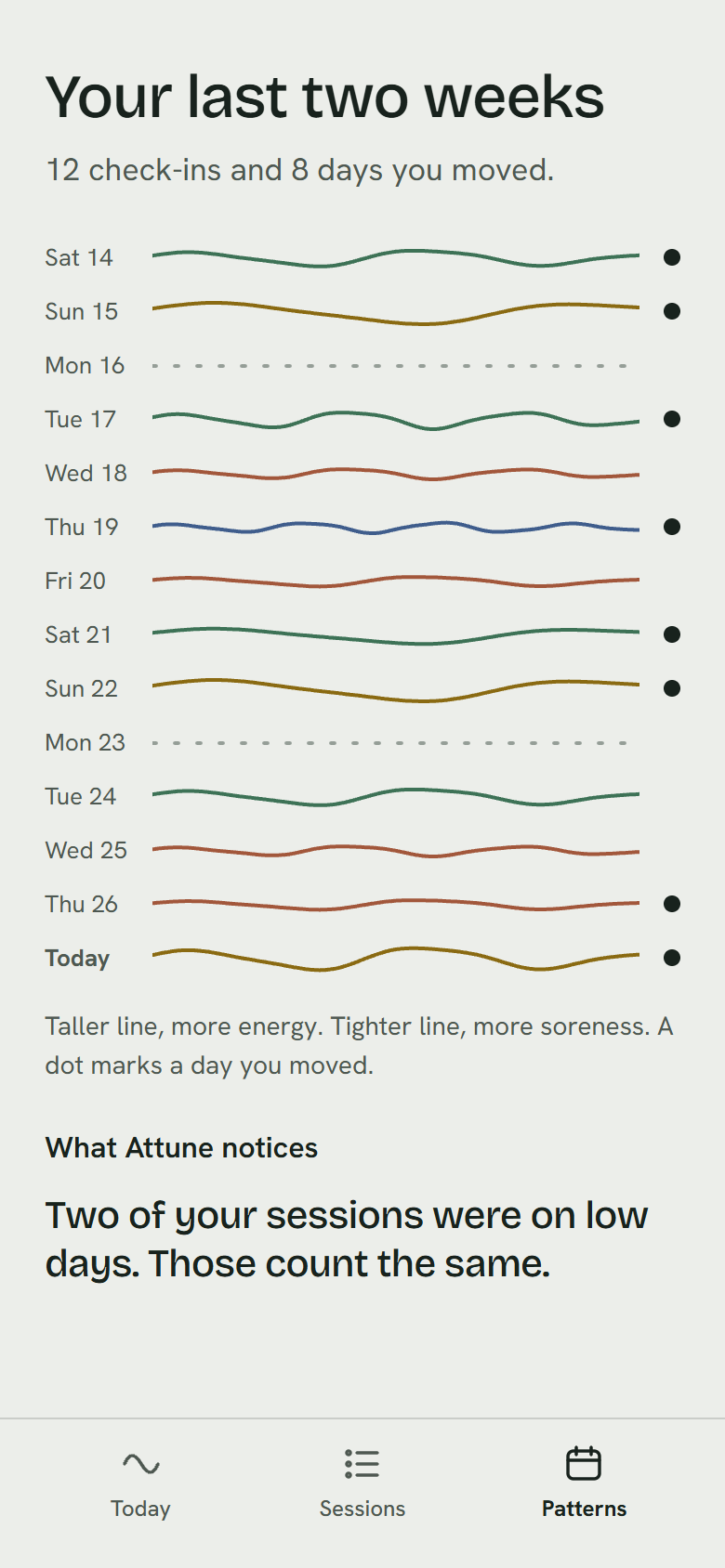
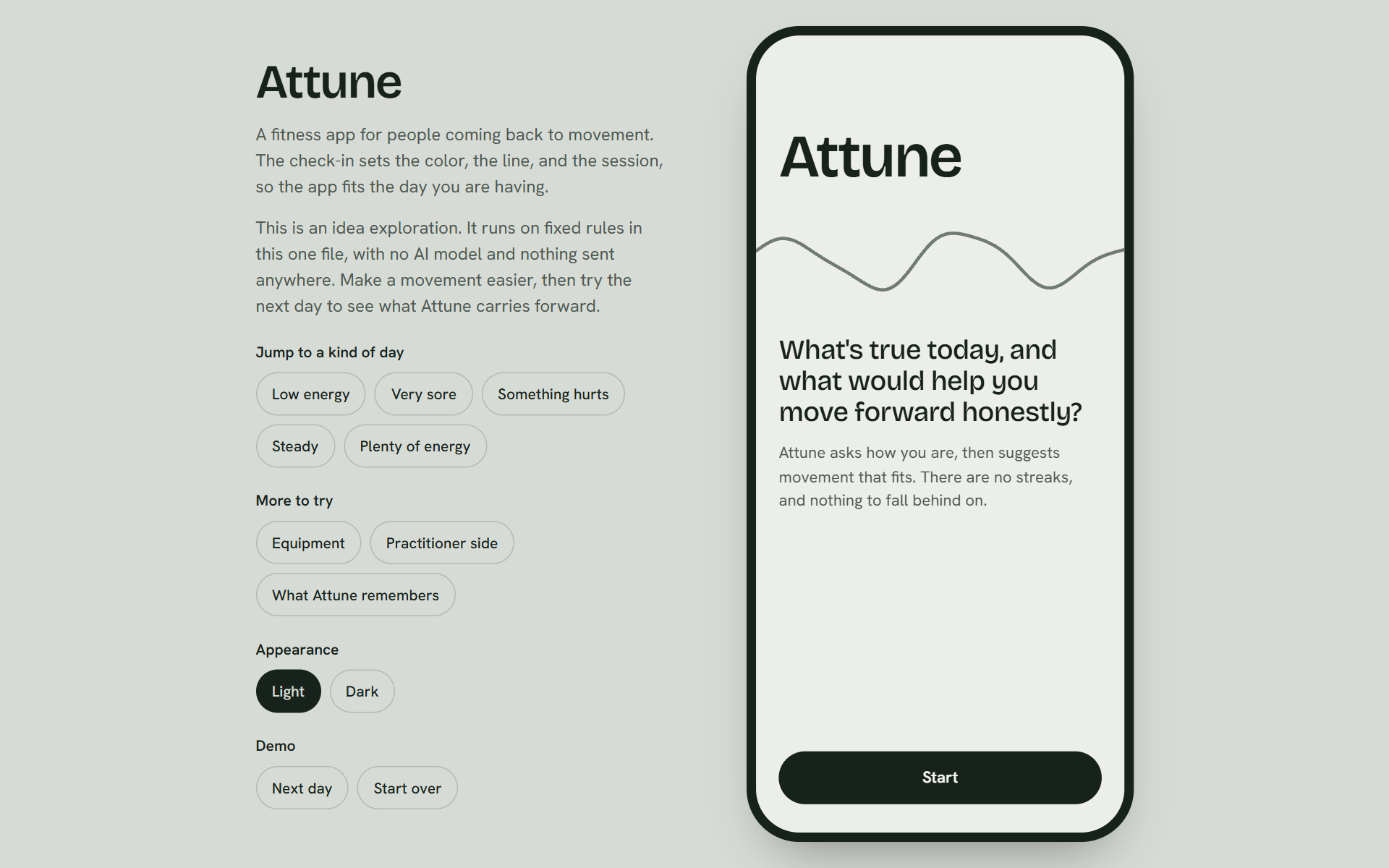
What I tried. One question at the start asks what equipment you have. After that, a check-in of three questions covers energy, the body, and the head. Pain has its own switch, apart from soreness, and asks where it hurts. "Same as last time" skips the questions. The answers draw a line on the screen that gets taller with more energy and tighter with more soreness. The screen also takes a color for the kind of day, so a recovery day and a strong day look different at a glance.
How does the session change and leave the person in charge?
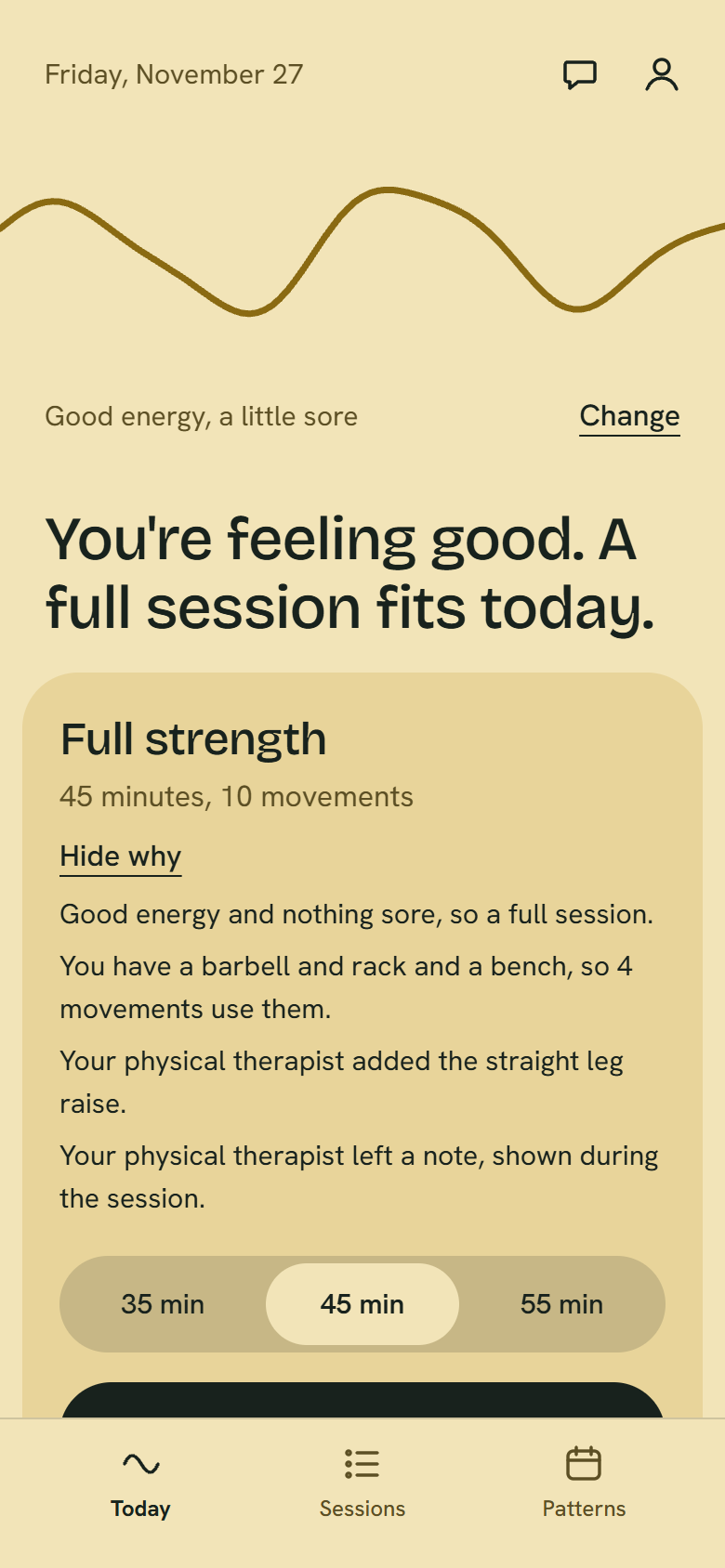
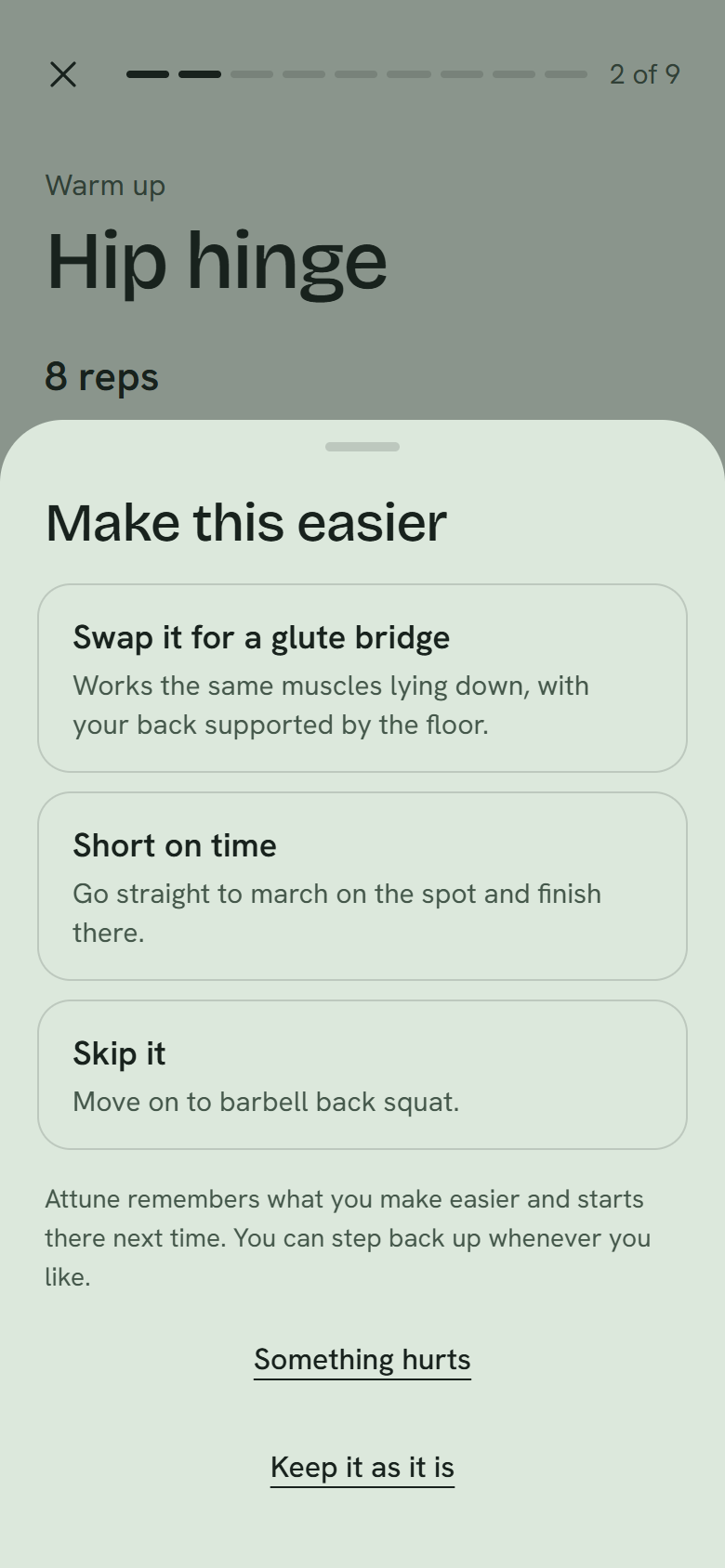
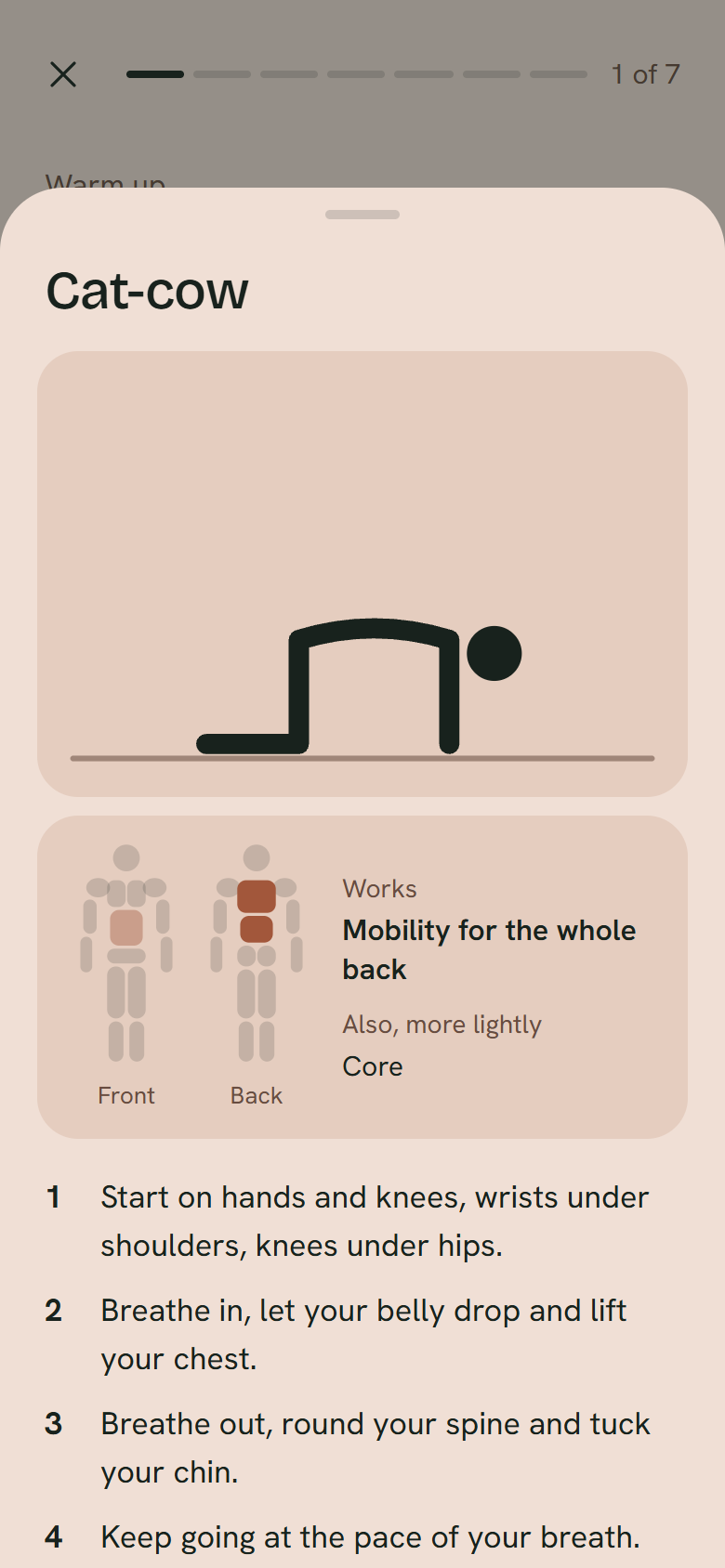
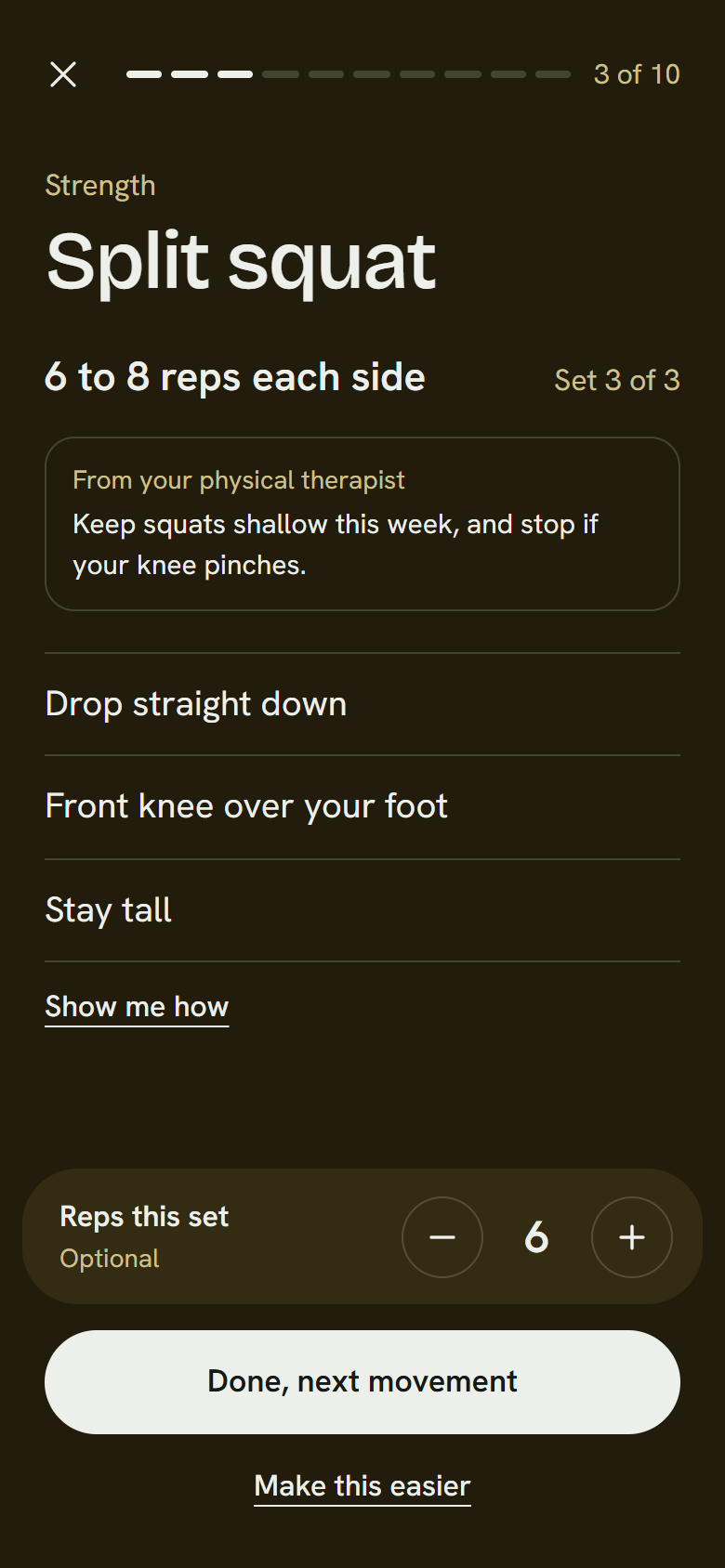
What I tried. Attune suggests one session, built only from movements you can do with what you have. "Why this fits" gives the reasons in plain words. The person can pick something else, change the length, or start any session whatever the check-in said. During a session, "Make this easier" swaps a movement for a gentler one, cuts it down, or skips it. Saying that something hurts turns the rest of the session gentle and keeps it away from that area. "Show me how" explains any movement with a figure, the muscles it works, and the steps.
How do you keep someone coming back without shame?
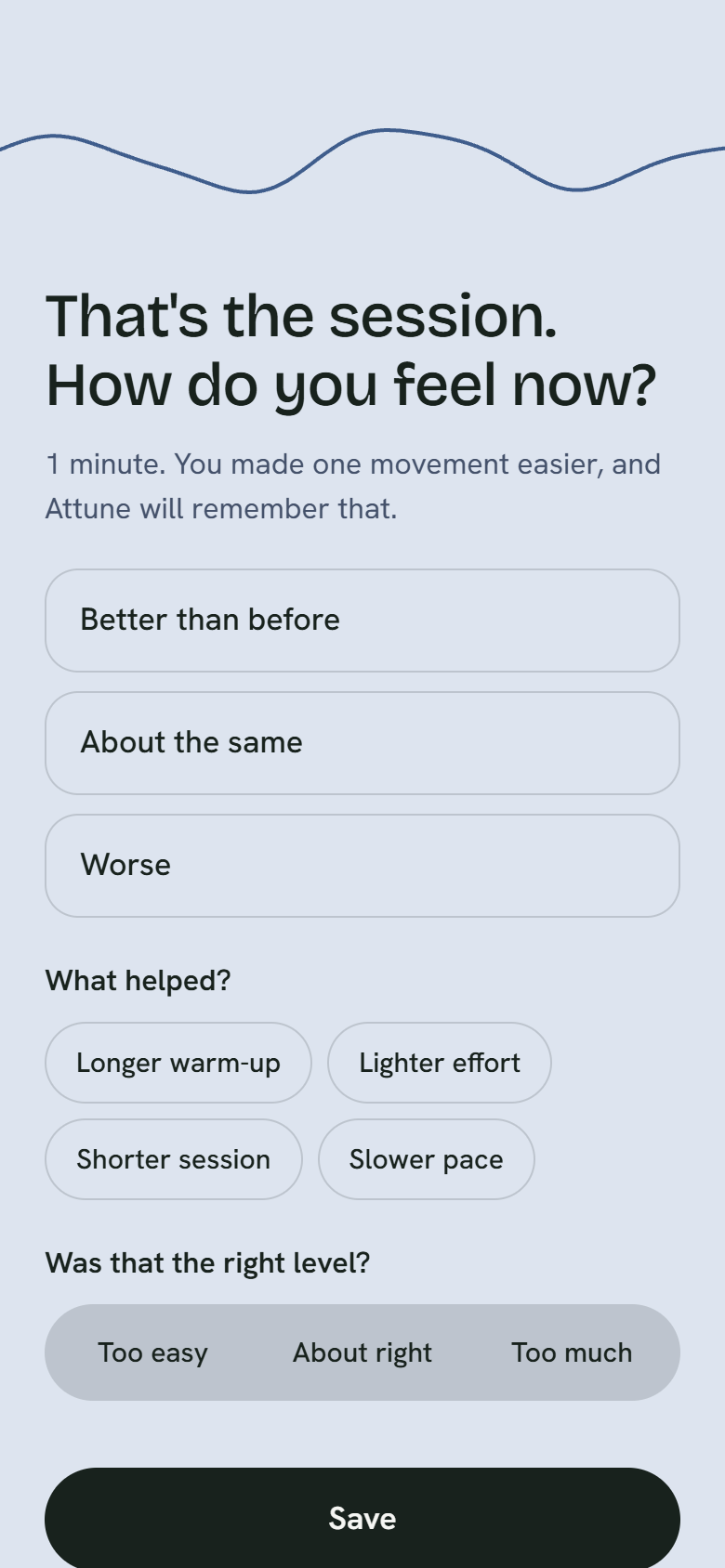
What I tried. There are no streaks and nothing to catch up on. A session cut short still counts. After a session Attune asks how you feel now, and if the answer is worse or too much, the next suggestion is a notch gentler. Patterns shows the last two weeks and says that sessions on low days count the same.
What should it remember, and who decides?
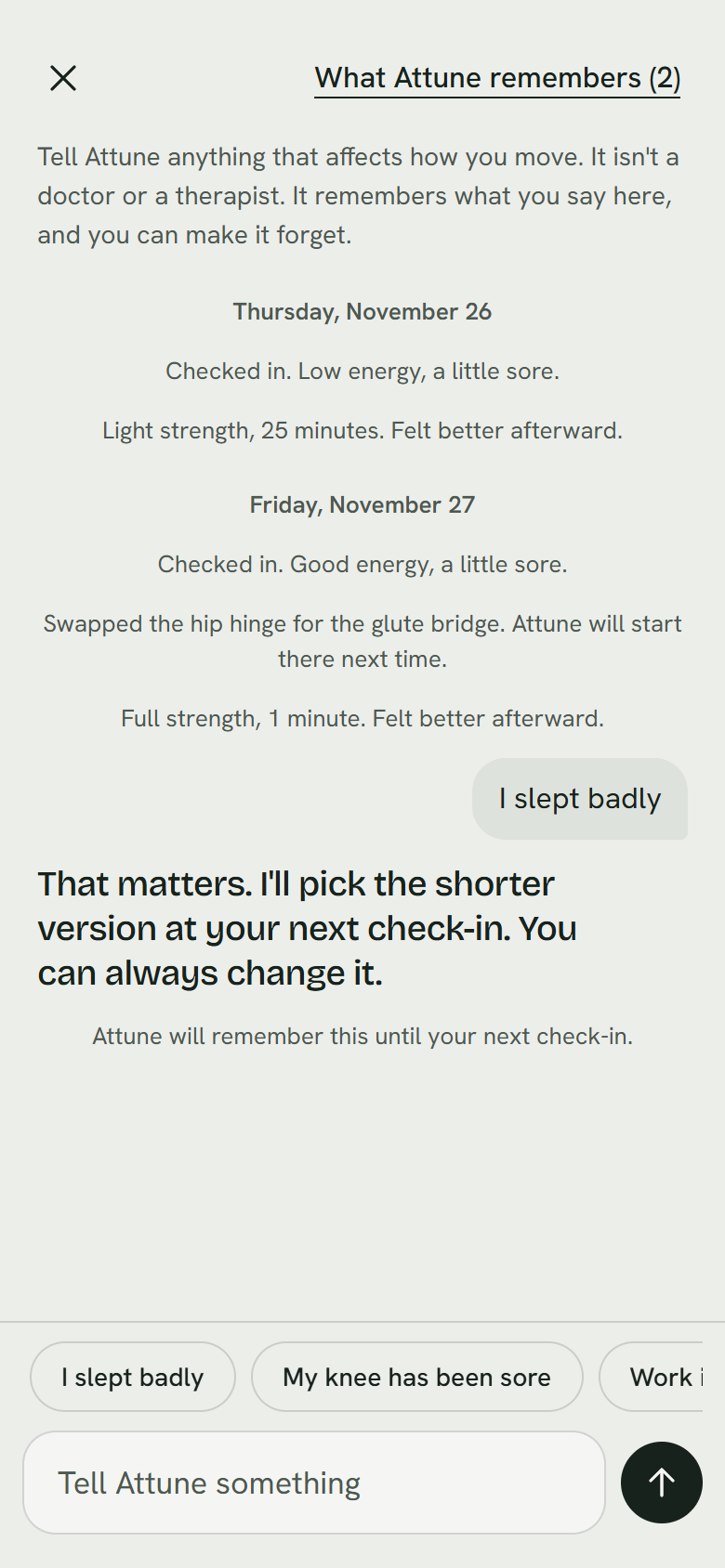
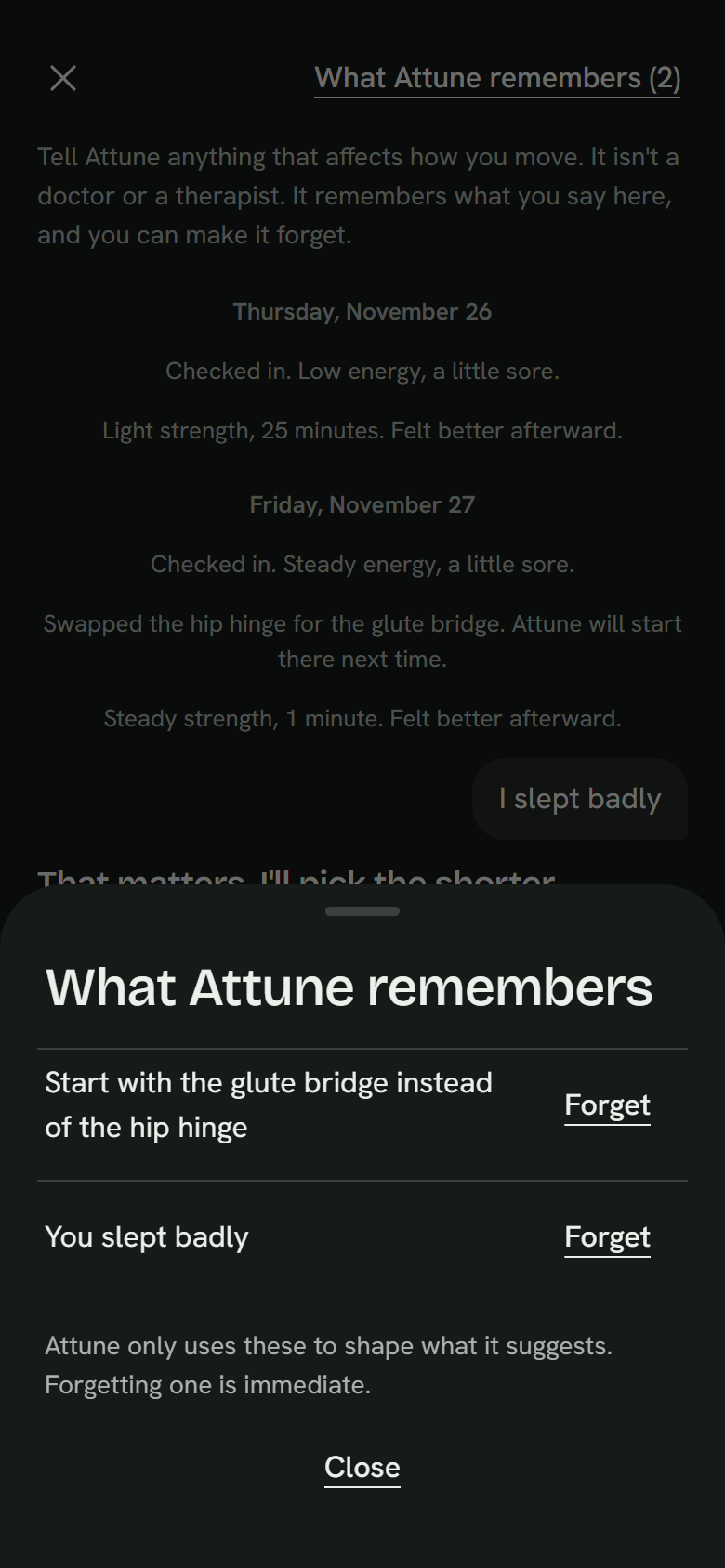
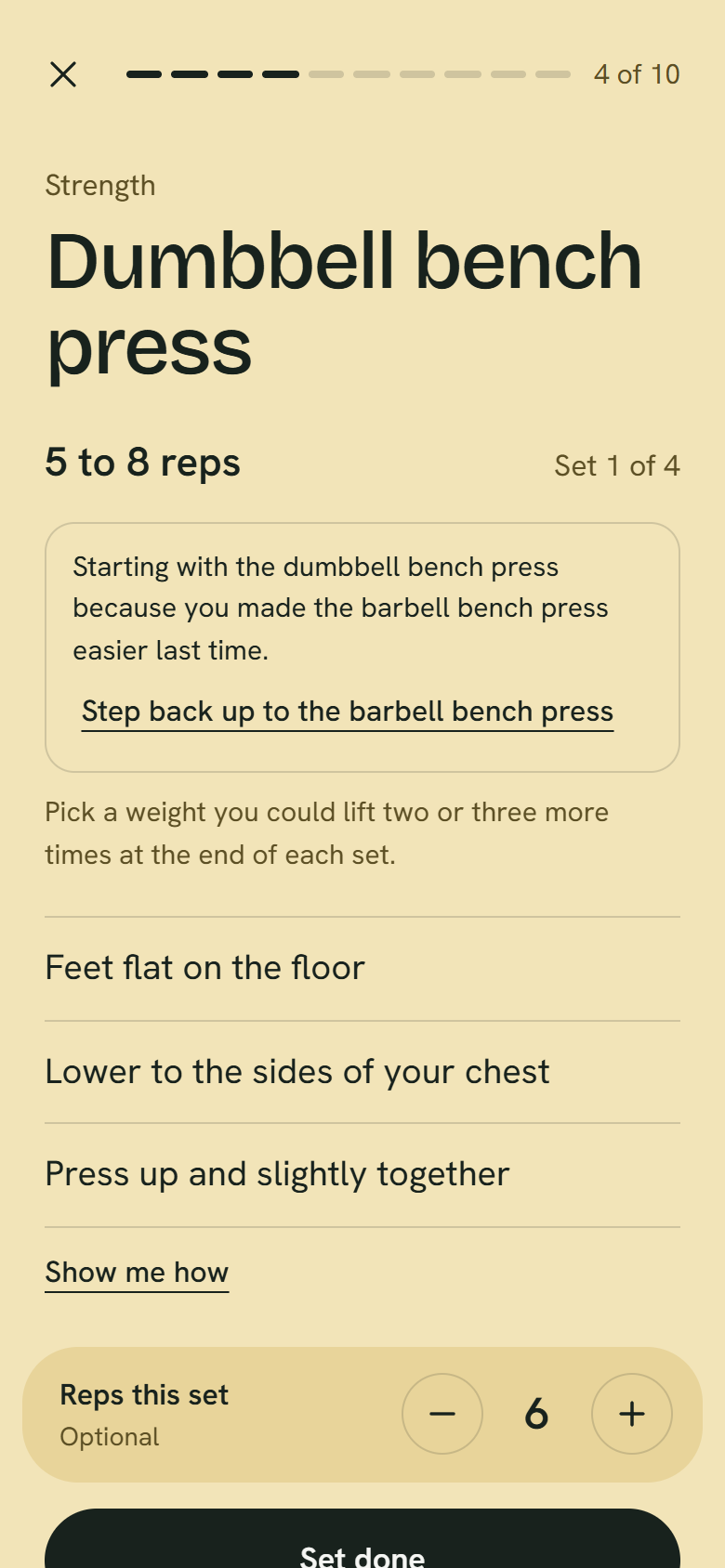
What I tried. Between sessions you can tell Attune anything that affects how you move, such as a bad night of sleep or a sore knee. It keeps only what bears on movement, shows you the list, and forgets an item the moment you ask. It does not guess at an injury. It says it cannot assess one and that you should have it looked at. I call the next part confidence memory. When you make a movement easier, Attune starts with the easier version next time, even on a good day, and says why. One tap steps back up.
How does a physical therapist or fitness instructor take part without a separate system?
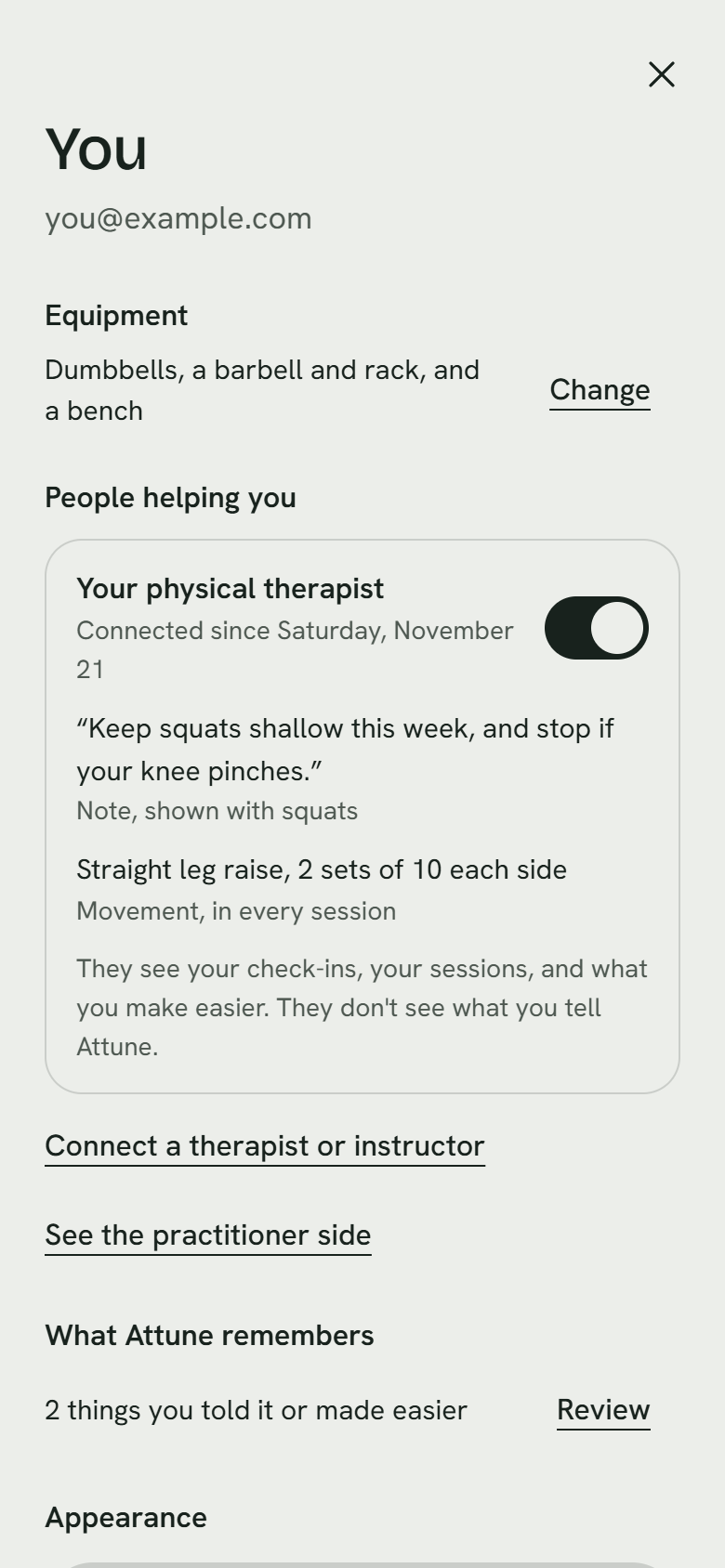
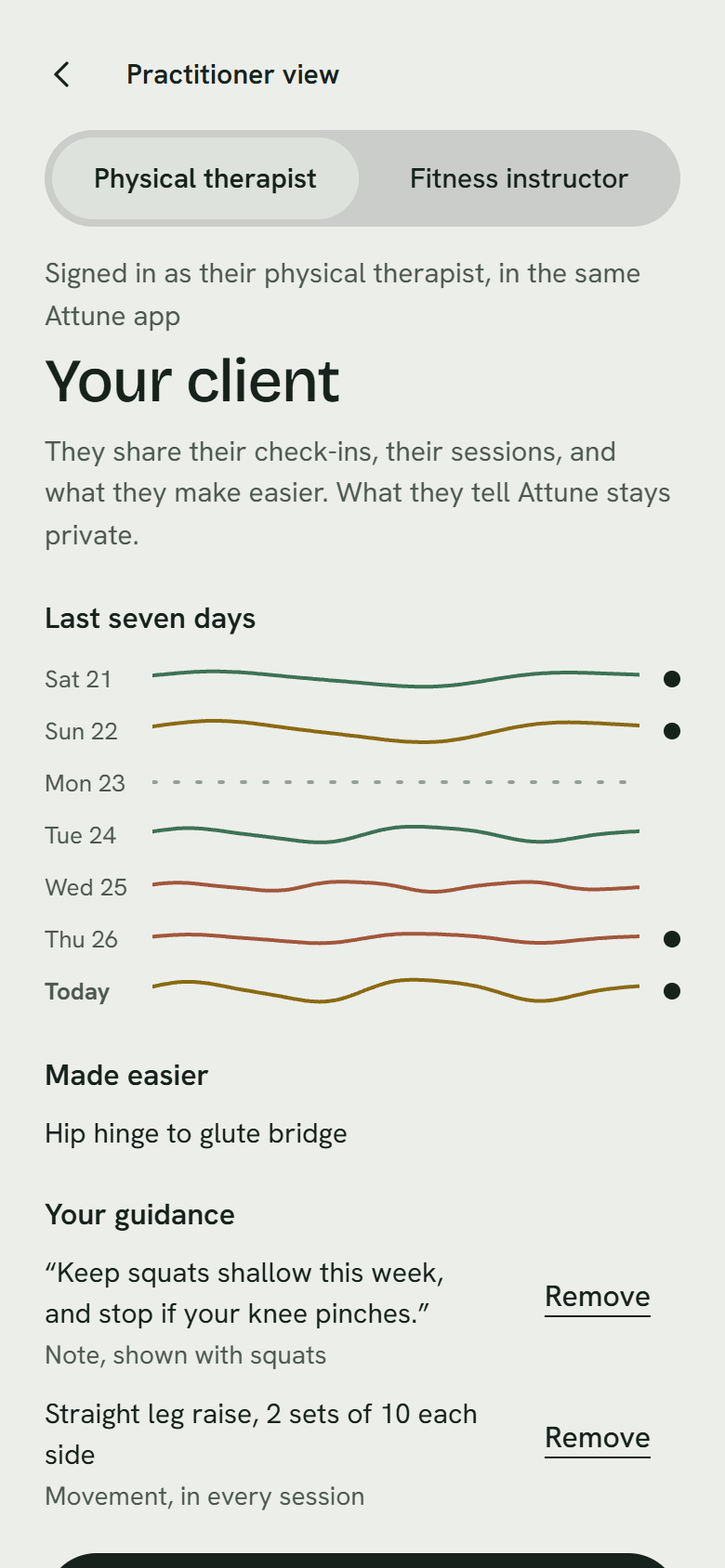
What I tried. The person shares a code, and the practitioner signs in to the same app. The practitioner sees the check-ins, the sessions, and what the person made easier. They do not see what the person tells Attune. They can add a note or a movement, and it shows in the person's sessions with their role on it. The person can switch a practitioner off. Attune still applies its own rules, so a day when something hurts stays gentle.
The prototype
Things to try
- Pick Something hurts under Jump to a kind of day, then open Why this fits
- Start a session, make a movement easier, then press Next day and start again
- Open Practitioner side and add a note
What I learned
The core idea was there from the start. What was missing was a way to package it so that getting started did not feel like a 20 minute task.
Building the prototype let me use the app as a real user and change it as my needs changed. That shaped the insights, the intelligence, and how and when the app should push back or lighten the load.
What's next
I want to pursue it. With the security and data problems apps have faced recently, I am being careful about how I approach it.
I also know that most people can open the AI model of their choice and have it build a program for where they are. Attune is a good deal less clunky than that is today. It also leaves room to partner with physical therapists and fitness instructors, who could add notes or exercises that shape a person's workouts without a separate system. Most of them love their own system. Keeping users is hard, though, and a system loses its value to the person over time.
What is real
The working app is a separate build. It runs on a phone, with sign in and a real database, and I shared it with a few people and with fitness instructors for feedback.
The prototype on this page is a light version of it. It runs on fixed rules, has no AI model in it, and stores nothing. Sign in is a demo and sends no email. The physical therapist, the note, and the connection code are sample data, and nobody is on the other end. The two weeks in Patterns are sample data too. Reloading starts it over.
The equipment question, confidence memory, and the practitioner side are in the prototype first. They are not in the working app yet.
The exercises come from public knowledge for now. I would partner with physical therapists and fitness instructors on them if this moves forward. Attune is not medical advice.